AI Photography for Brazilian Restaurant Menus
A rodízio sells unlimited table service at one price, so nothing on it is a portion — and every platform photo rule assumes the thing you sell is a portion. What a Brazilian menu's photographs depict has to be settled before anyone decides how to light them.
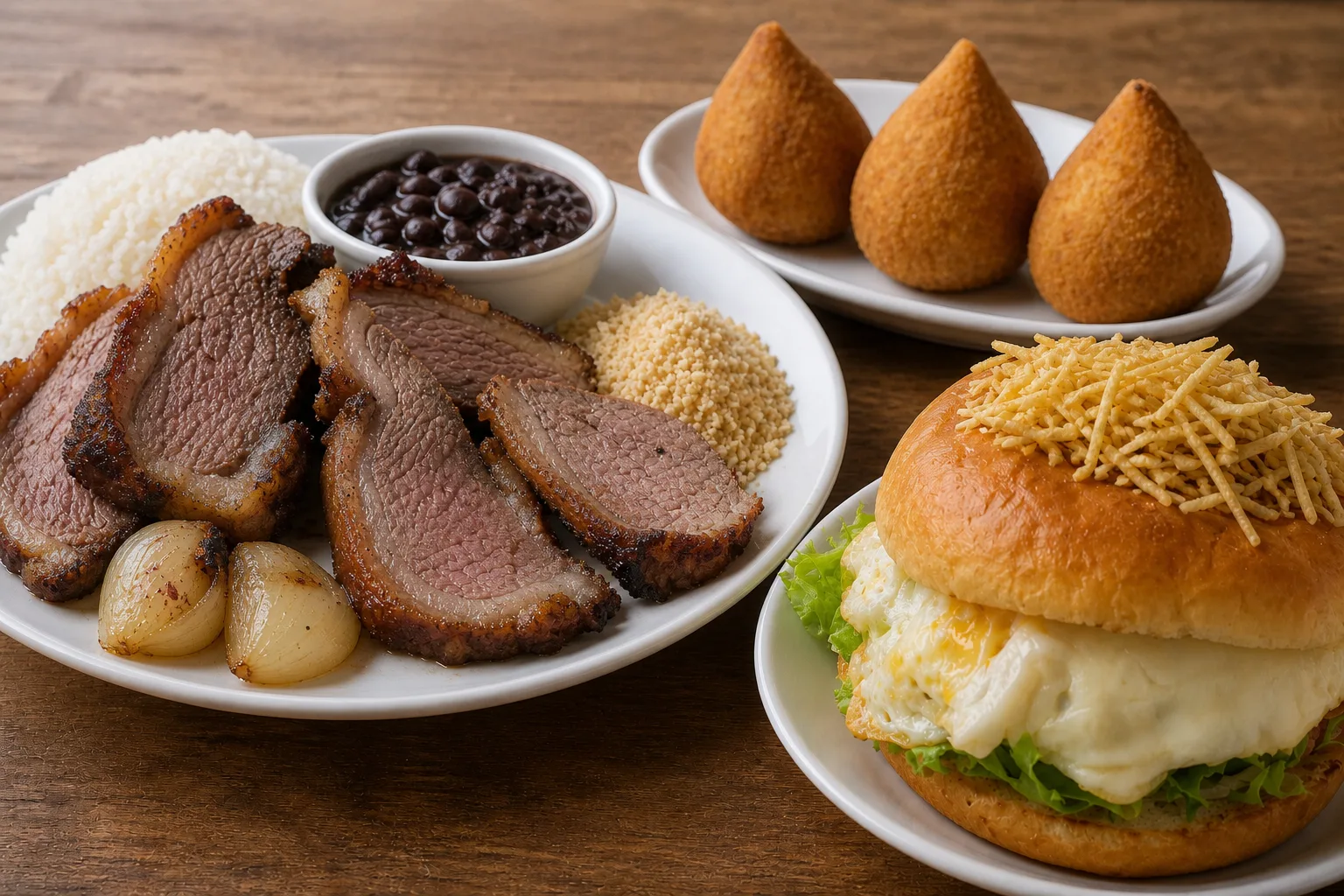
A Brazilian menu sells three different kinds of thing. A lanchonete sells an object, a prato feito sells a fixed assembly, and a churrascaria sells a service. Every platform photo rule is written for the first one.
A rodízio is priced by the table, not by the plate
Every published item-photo rule assumes the listing is a portion. DoorDash requires the item to fill 50% to 70% of the frame with at least 80% of it visible; Uber Eats requires a single item; DoorDash bars photos of several items sold separately, excepting things sold together as a bundle. Sources are in our DoorDash photo requirements guide.
A rodízio has no portion. The customer buys unlimited table service at a price, and no plate on the floor is the item. Photograph the pass — several cuts carried on skewers at once — and you have photographed several things you also sell à la carte, which is the platter problem on the BBQ platter page.
The gesture that defines the service is the one thing you cannot shoot: carving off the skewer at the table puts a hand and a blade in the frame, and Grubhub bars body parts outright while DoorDash permits hands only where they do not obscure the item.
So settle beforehand what the listing depicts — one cut on its skewer, or the board a table is served from. Either is defensible. Discovering mid-upload that the frame holds four other listings is not.
Every cut you name becomes its own listing
DoorDash names duplicates among its eleven rejection reasons: every unique menu item needs its own photo, and reuse is permitted only for the exact same item — its published example being a Beef Taco and a Chicken Taco.
One rodízio listing stays clear of that. The moment the menu names picanha, fraldinha, alcatra, costela and linguiça, each is a unique item — and each is grilled meat on a skewer.
What tells them apart is not colour and not size, but an edge feature present on one side of the piece only: picanha's fat cap runs along a single edge, fraldinha's coarse grain reads only across the cut face, costela has the bone. The variable is rotation. Turn each piece so its identifying face is toward the camera; sear and doneness are on the steak page.
White rice, black beans, one exposure
The prato feito is a flat spread: wide and irregular, filling a 16:9 upload and losing its outer edges when DoorDash centre-crops to the 1:1 thumbnail.
Its harder problem is tonal. White rice and black feijão sit against each other with nothing in between — most of the range a sensor has, across a few centimetres. Expose for the rice and the beans become a featureless hole; expose for the beans and the rice clips. No angle fixes it: only a large soft source and a mid-tone surface, darker than the rice and lighter than the beans.
Farofa makes it worse. A dry beige powder with no sheen and no structure of its own, it travels — dressed across the rice it deletes the boundary between the plate's two palest regions, and at thumbnail size that half of the plate becomes one field. If it goes out as a mound, photograph a mound.
X-tudo is a list of ingredients, not a burger
The lanches are the tall stacks, and their names are inventories: X-salada, X-egg, X-bacon, X-calabresa, and X-tudo — bread, patty, ham, egg, bacon, cheese, corn, peas, lettuce, tomato, shoestring potato. The listing text says what is in there, so misrepresentation has a written standard here and the photograph is read against a list.
That rules out the fix a sandwich shop uses. Several of the named ingredients are loose, and cutting the stack to show a cross section releases them onto the board. A lanche is shot whole and standing, so the named parts have to be legible at the rim — and the batata palha crowning the top bun, the thing that breaks the silhouette, is the first thing a square centre-crop takes. What each platform's crop does to a stack is on the burger page.
The salgados are the only listings that photograph themselves
Coxinha, kibe, bolinho de bacalhau, empada, pastel and pão de queijo are the scattered-multiple half of the counter, and the easy ones: a teardrop, a torpedo, a sphere, a fluted cup, a flat envelope. The outline is the product name, and outline survives a thumbnail.
Which is why the obvious shortcut is the expensive one. One photograph of the heated case appears to cover six listings, but it is six items sold separately in a single frame, and then one file reused six times. One shape per frame, spaced so no two outlines merge. Pão de queijo is the exception: a smooth pale sphere with no outline feature at all, needing a ground darker than itself before it has an edge.
Count the images before you count the listings
On most menus, listings and photographs are the same number. Here they are not, in both directions at once — one rodízio listing may need a single image while the cuts it names need six. Write that list before anyone lights anything. Our menu photography cost comparison prices the three routes per image and per dish, and this list is the number those prices multiply.
See how MenuFactory works — what a rodízio photograph depicts is a menu decision, and changing your mind about it costs nothing here.