AI Steak Photography for Delivery Menus
Doneness is the only thing a steak buyer wants to see, and the only way to show it is to cut the steak — which puts the photo straight into DoorDash's misrepresentation rule.
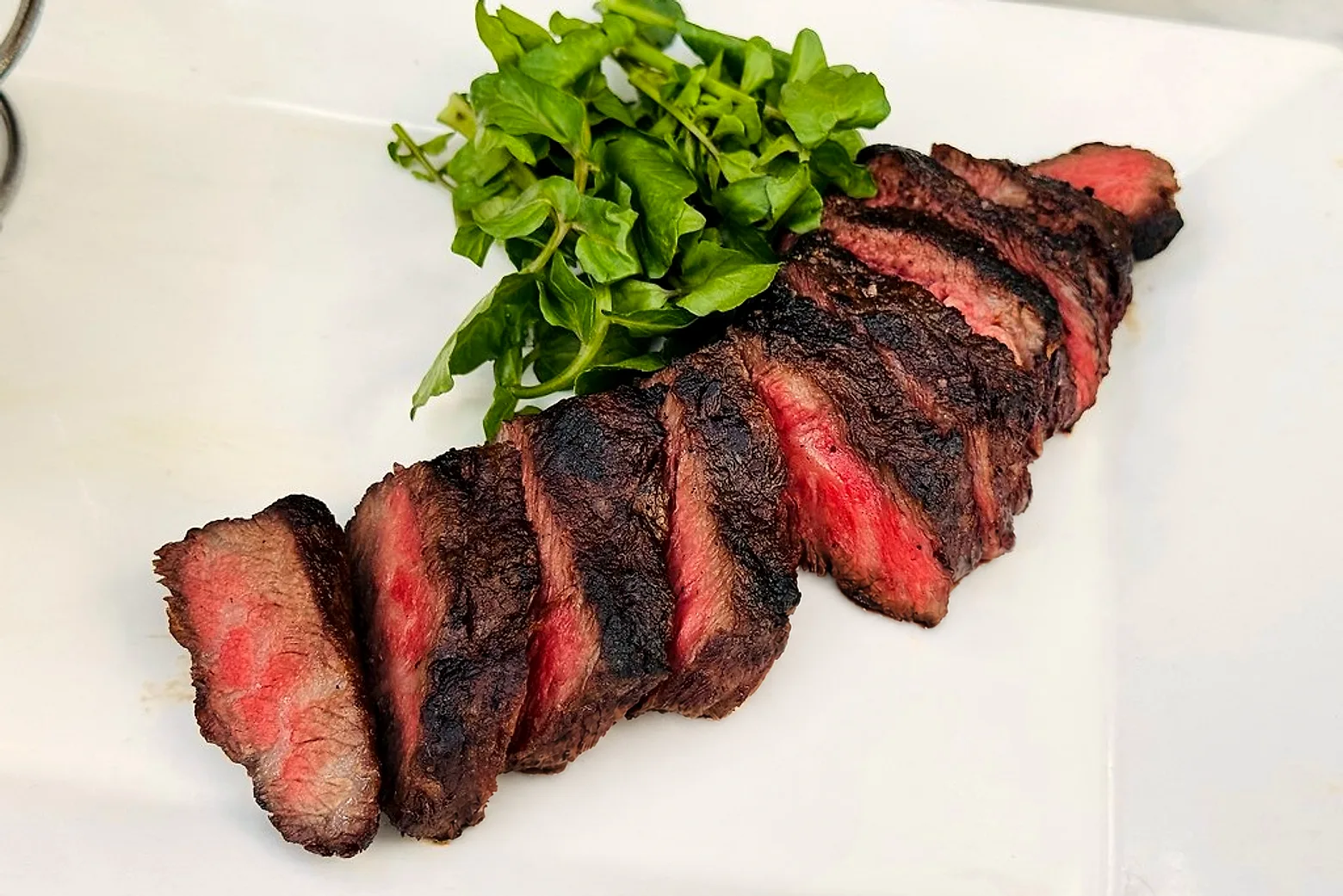
A steak is a wide, low subject, which makes it one of the easier dishes to crop. Its real problem is not geometry. It is that the single fact customers order on — doneness — is invisible until you cut the steak open, and cutting it open changes what the photo is showing.
What each platform's crop does to a steak
The item specs below are the platforms' own, checked against their published pages on 2026-08-15 (source list in our DoorDash photo requirements guide).
| Platform | Item ratio | What a steak loses |
|---|---|---|
| DoorDash | 16:9 landscape only | Nothing — a wide subject in a wide frame |
| DoorDash thumbnail | centre-cropped to 1:1 | The ends of the plate, and the outer slices of a fan |
| Uber Eats | 5:4 to 6:4 | Little at 6:4 |
| Grubhub | 4:3 | Nothing |
| Grubhub desktop header | cropped to 4:1 | Little — a horizontal band lands along the cut faces |
The wide silhouette makes 16:9 and 4:1 easy and 1:1 the crop to design for. A fanned slice arrangement laid out left to right will lose its outer slices in the square thumbnail. Angle the fan diagonally instead, so the arrangement occupies a more compact bounding box and the square crop still contains the whole thing.
The rule that makes steak photography different
DoorDash's rules include a misrepresentation clause: the image has to represent the item as served. This is normally a rule about portion size and garnish. On steak it is a rule about the entire composition.
If your kitchen sends out a whole uncut steak, a photograph of a fanned, sliced, medium-rare interior is showing the customer something they will not receive. The photo is more persuasive precisely because it is not the dish.
Two honest ways through it:
- Serve it sliced and photograph it sliced. Several steakhouses already plate this way for delivery, because a whole steak in a container arrives steamed rather than seared.
- Serve it whole and photograph the sear. Shoot the crust at a low angle with raking side light so the char and the grill marks carry the image, and let the menu copy state the doneness options.
What does not work is photographing a cut steak and delivering an uncut one.
The sear is a lighting problem, not a crop problem
A steak's surface is dark and matte in the shadows and specular where the fat has rendered. Flat overhead light collapses that entire range into one brown shape. Raking light from one side at roughly the height of the plate is what separates the char from the meat.
This is also the reason steak is one of the few dishes where the delivery platforms' preference for bright, even product photography works against you. Even light is exactly what removes the texture you are selling.
The shot that covers all five crops
Shoot one master at 4:3, at least 2400 × 1800 px, steak centred and angled diagonally, plate margins on all four sides, one strong side light. Unlike most dishes on this list, a wide subject crops down to every ratio in the table above, including the 4:1 header — so steak is one shoot, not two.
See how MenuFactory works — it keeps the dish exactly as your kitchen plates it and improves the light, which is the half of this problem that is safe to change.