AI Photography for Chinese Restaurant Menus
A Chinese takeout menu can run to a hundred items, and most of them are brown sauce over white rice. DoorDash requires a separate photo for every one — and rejects duplicates.
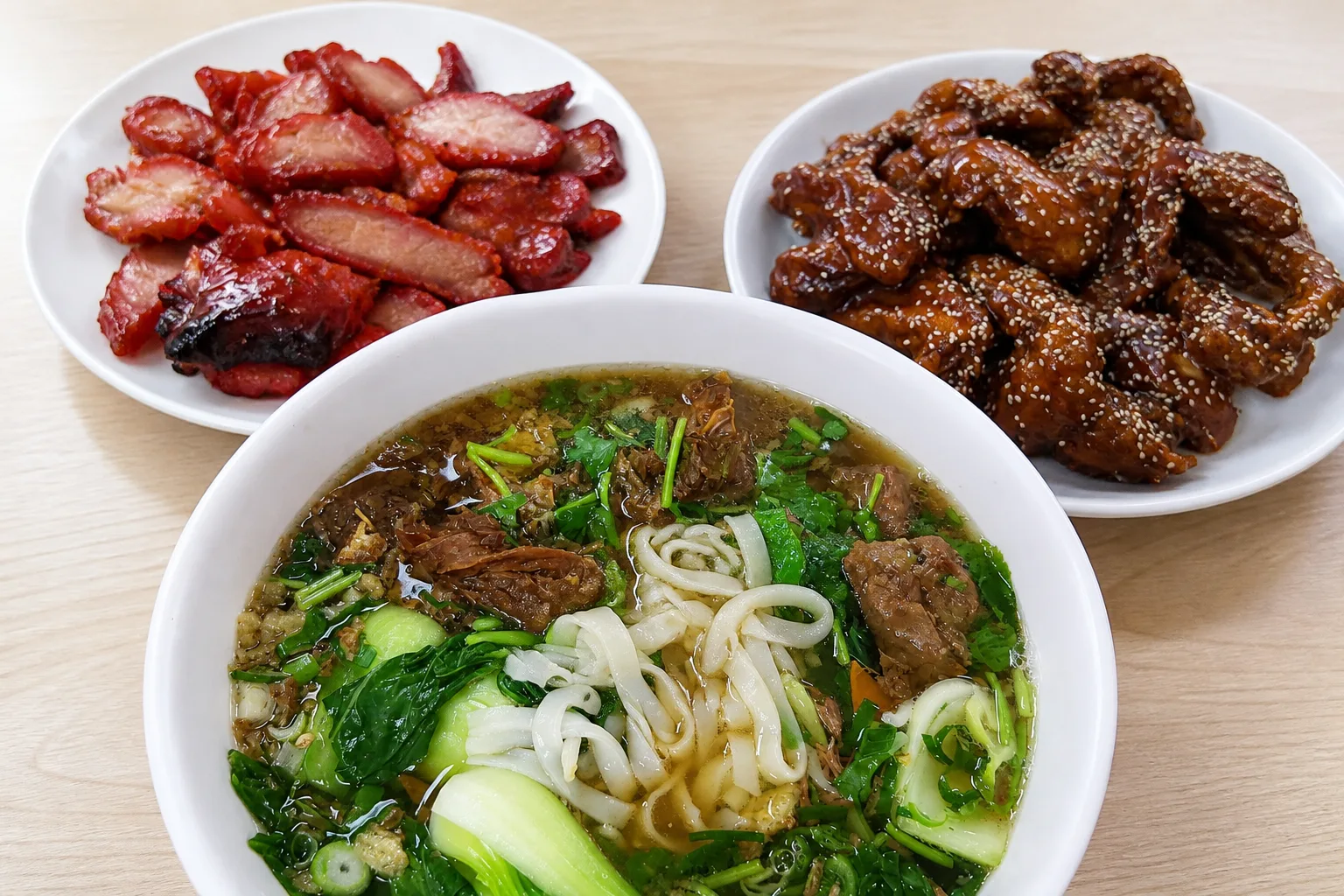
No other cuisine on a delivery platform has this menu-length problem. A neighbourhood Chinese kitchen commonly lists more items than a pizzeria, a burger shop and a sushi bar combined, and a large share of them share one silhouette: something in sauce, over rice, in a container.
The duplicates rule scales badly here
DoorDash lists eleven named rejection reasons, and duplicates is one of them: every unique menu item needs its own photo, and reuse is permitted only for the exact same item. Its published example is a Beef Taco and a Chicken Taco — two products that look nearly identical and still require separate images. Sources are in our DoorDash photo requirements guide.
Apply that rule to beef with broccoli, beef with mushrooms, beef with garlic sauce and Mongolian beef. Four listings, four required photographs, four brown-sauced plates that differ in one vegetable and one sauce tint.
The honest response is not to photograph everything. It is to decide which items earn a photograph. DoorDash's own merchant research — a Q2 2022 study of over 15,000 local small business merchants — found that menus with item photos see up to 44% more monthly sales, but that is a statement about menus having photos, not about every line item having one. A menu with thirty well-separated photographs on its best sellers is a stronger asset than a hundred near-identical ones, and it is the only version a real kitchen will ever finish.
Three silhouettes, and what each costs
Noodle soups and congee are bowls: compact, deep, and flattened into a beige circle by an overhead shot. The angle that keeps the depth is worked through on the ramen page.
Roast meats — char siu, roast duck, soy chicken — are a wide spread of sliced protein on a platter, the same shape and the same crop behaviour covered on the BBQ platter page. Their gloss is the freshness signal and the reflection problem at once.
Battered fried pieces — salt and pepper wings, General Tso's, sesame chicken — are the scattered-multiple case, where composition has to gather the pieces so the square thumbnail does not change how many the customer sees. That is the wings page exactly.
Combination plates versus the single-item rule
Uber Eats requires an item photo to show one menu item, and states the rule with an example: a photo for pizza should display only pizza, not pizza and hamburgers. The test is whether the frame holds two things you sell as separate listings, not how many objects sit on the plate. A combination plate fails it by construction: the entrée, the fried rice, the egg roll and the soup are each their own listing elsewhere on the same menu.
There is no clever framing that makes a combo plate a single item. What works is deciding which listing the photo is for. The combo listing can carry a photograph of its main entrée alone, with the description doing the work of naming what accompanies it; the components that also sell separately get their own photographs anyway, which you need regardless.
Everything arrives in a container, and the text on it is not the problem
Chinese takeout ships in printed containers and stapled paper bags more consistently than almost any other cuisine, and both platforms make room for that. DoorDash accepts branding that physically exists on the item; Uber Eats lists packaging in the exception to its own ban on text and logos, asking only that nothing profane appear. The print that was already on the box when you set it down is not what gets an item photo rejected. A watermark or a shop name laid over the file afterwards is, because the exception covers the food, the packaging and the plating, and nothing that arrives in an editor.
The practical rule is unchanged — photograph the food plated, not packaged, even though packaged is how it arrives — but the reason is merchandising rather than compliance. A closed container photographs the box, and an open one photographs the food down a well, half of it behind the rim. That is not misrepresentation: the dish is the same dish. It is the difference between showing the product and showing the box.
Fewer photos, better separated
Take the four highest-selling items that share a sauce base and shoot them consecutively, same light, same angle, same plate. Look at the four thumbnails together. If you cannot name which is which, the problem is not the photography — it is that the menu is asking photographs to do a job the descriptions should be doing, and the answer is fewer photos, better separated.
See how MenuFactory works — the cost that stops most long menus is per-item shooting time, and that is the constraint this removes rather than the styling.