AI Photography for French Restaurant Menus
A French plate is arranged before it is cooked. On a composed plate a crop does not cost you food at the edges — it costs you the arrangement, which is the thing being sold.
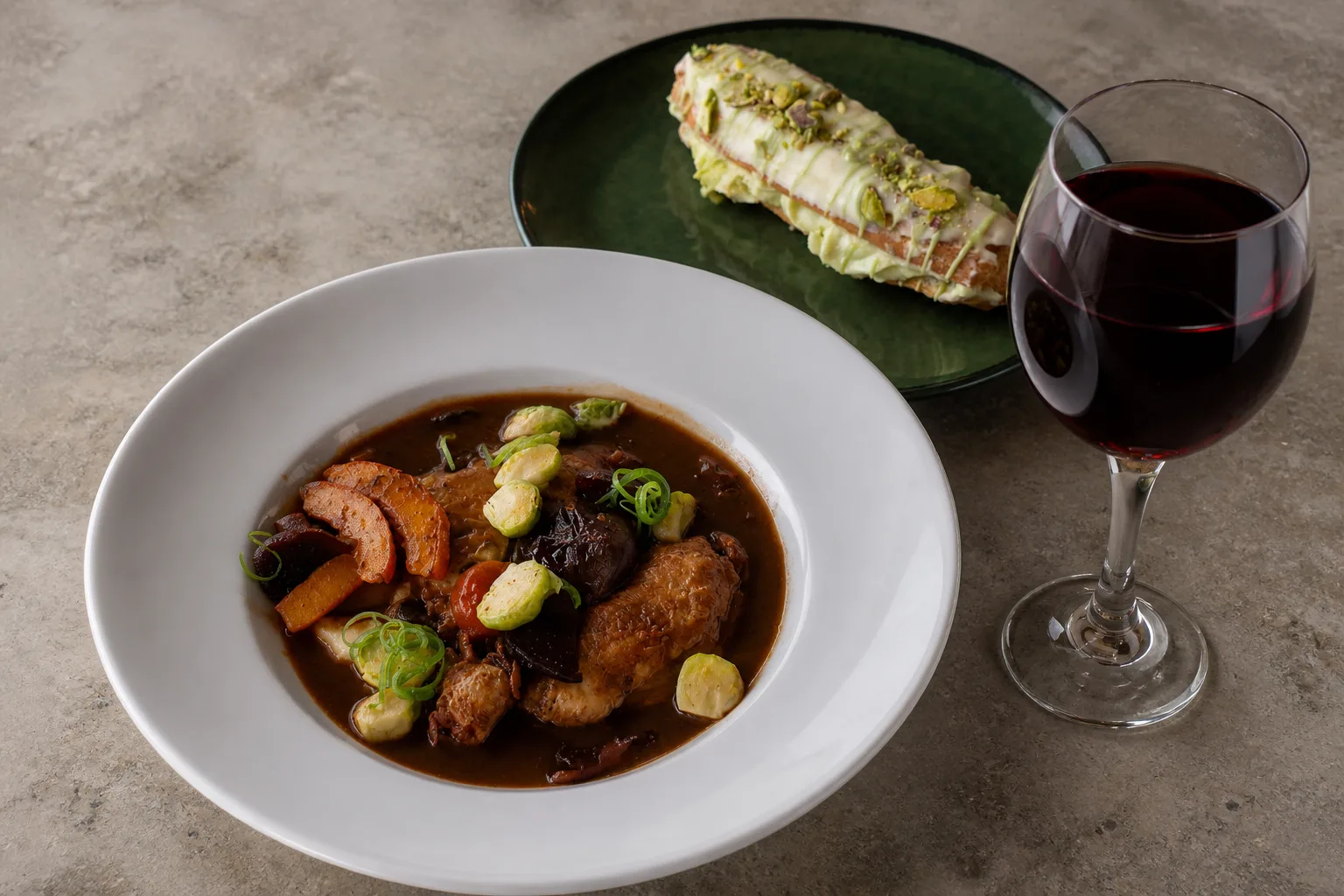
On most menus the plate is a container. A French plate is a composition: the protein off-centre because someone decided it should be, the sauce a swipe rather than a pour, the empty porcelain between them part of the design. Every crop a delivery platform applies re-plates that dish, and it does not ask.
The arrangement is the product, and every crop is a re-plating
Five crops act on one upload. DoorDash accepts 16:9 only, then centre-crops it to a 1:1 thumbnail on some surfaces; Uber Eats recommends 5:4 to 6:4; Grubhub takes 4:3 and crops its desktop header to 4:1. Sources are in our DoorDash photo requirements guide.
A garnish at the far edge of the plate survives one of those. The fix is the one the steak page uses on a fanned slice arrangement: build on a diagonal rather than left to right, so the composition sits inside a bounding box the square crop can hold.
A plate that is mostly empty, in a frame that must be 50% full
DoorDash requires the item to fill 50% to 70% of the frame with at least 80% of it visible. Both numbers assume the item and the plate are one object; on a composed plate they are not. The rim and the negative space are part of the design, and a moderator counts them as background.
Fill the frame with the plate and the food sits small inside it; crop to the food and the 80% rule catches you from the other side. The way out is a smaller plate — two sizes down, the same arrangement fills the frame to the same point in that range and gives the food more of the picture, and unlike a camera move it is a change you can make in service. Use a real surface under it, too: DoorDash passes a white background only when it looks natural, and white porcelain on a white sweep reads as a cut-out.
A house plating style is a duplicates problem
DoorDash lists duplicates among its eleven named rejection reasons: every unique menu item needs its own photo, and reuse is permitted only for the exact same item — a Beef Taco and a Chicken Taco, in its published example.
French meets it in an unusual way, because here the similarity is deliberate. A house plating grammar — protein off-centre, sauce in a swipe, one vegetable, one herb — is what makes a room's food look like one kitchen's work. Shot identically, the coq au vin, the duck and the rabbit become three brown proteins in the same position under the same swipe.
Separation has to come from what the grammar does not standardise: the surface of the component — a carved seared face against a braise visibly falling apart — and only if the frame gives it real size. Nor may one photo show several items sold separately, which rules out the gratin, the paired glass and a sauce the menu prices on its own.
Glaze and glassware both photograph the room
Pâtisserie is the second shape and the least forgiving. A mirror glaze, a lacquered fruit tart, the caramel on a crème brûlée — each is a curved mirror showing whatever sits above it, and at thumbnail size a hard reflection stops reading as shine and reads as a blown-out patch. That is the donut page's whole subject, and an entremet changes none of it.
Wine and café service is the third shape, and a stemmed glass is the worst possible fit for a mandatory 16:9: straight on it surrenders most of the frame to background, overhead it becomes a circle of liquid. The coffee page works through which side of that trade to take.
One compliance detail belongs only here: a stamped chocolate plaque is a logo that physically exists on the food, and both platforms allow it — DoorDash accepts branding that is on the item, and Uber Eats names food items, packaging and plating as the exception to its ban on text, logos and watermarks, asking only that the wording carry nothing profane.
Six minutes a dish is not a plating schedule
DoorDash's free photoshoot covers up to fifteen items in a 1.5-hour session, with you supplying the food and the labour to prepare it, and DoorDash asking that the images stay off other delivery platforms. Six minutes an item, plating included, for one storefront out of three.
French is where the instinct to hire a photographer instead is strongest, and it is not wrong — the plating is craft, and craft photographs better than it describes. The nearest paid equivalent on the US rate card we checked, fifteen styled dishes, is $1,987 across eight hours with a four-day turnaround and no platform restriction. Our menu photography cost breakdown sets both against the phone and the generated route, including the per-dish prep fees a headline rate never shows.
Draw the square before the chef plates
Plate one main as the kitchen actually sends it, photograph it, and lay a square mask over the middle of the file. If the sauce, the garnish or a third component falls outside it, move the camera or move the food — and here the food is usually the better answer, because the arrangement is yours to design. What you cannot do is tighten the plating for the photograph and serve the loose version.
See how MenuFactory works — it keeps the plate exactly as your kitchen arranged it and decides the light afterwards, which is the half of a French shoot that does not have to fit into six minutes.