AI Photography for Indian Restaurant Menus
Char is what proves a dish came off a tandoor, and char is the first thing a thumbnail turns into either burnt patches or noise. Indian menus lose their best evidence in compression.
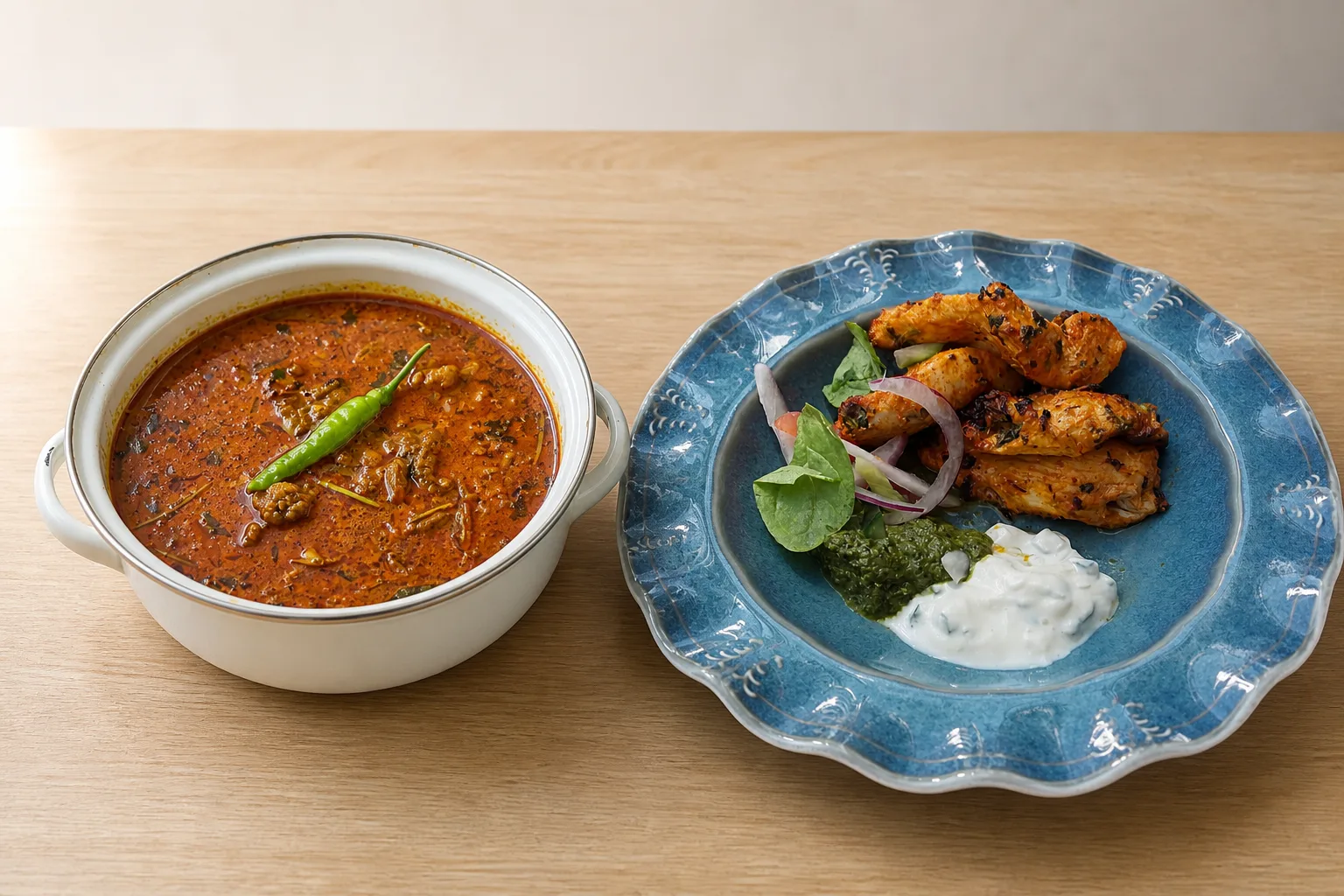
An Indian menu splits cleanly into two halves that need opposite treatment. The curries are opaque bowls where the protein is submerged and has to be argued for. The tandoor items are the reverse: everything that matters is on the surface, in the form of char, and char is fragile in ways that curry is not.
Char is evidence, and evidence compresses badly
Blistering and blackened edges are what distinguish tandoori chicken, seekh kebab and a properly cooked naan from an oven-baked imitation. They are also small, high-contrast, high-frequency detail — precisely the category that lossy compression discards first, and the platforms re-encode everything you send.
Two failure modes follow, and they pull in opposite directions. Under-expose and the char merges into the shadows, so the piece reads as burnt rather than charred. Over-expose to save the shadow detail and the surrounding meat goes flat and pale, which is DoorDash's lighting rejection reason waiting to happen.
The resolution is the same one the fried chicken page reaches for the same physical reason: fill the frame with fewer pieces so each one carries more pixels, and light from low and to one side so the texture has real light-and-shadow contrast to survive on rather than low-contrast tonal variation. Compression preserves genuine edges far better than it preserves subtlety.
The mixed grill platter behaves as a wide spread and crops like one — the ground covered on the BBQ platter page, including why an evenly lit platter looks worse than a raked one.
The curry half has the opposite problem
A curry hides its protein by design. The sauce is opaque, the pieces are submerged, and the photograph is asked to make a claim it cannot directly demonstrate.
The line that matters is DoorDash's misrepresentation rule: the image must show the dish your kitchen actually sends out. A curry that arrives fully stirred, photographed with six pieces of chicken artfully surfaced, overstates the portion in exactly the way the rule is about. Plate a real portion and let whatever naturally breaks the surface break the surface. The curry page works through the angle and the colour handling.
Where the duplicates rule bites
DoorDash lists duplicates among its eleven named rejection reasons: every unique menu item needs its own photo, and reuse is permitted only for the exact same item — its published example being a Beef Taco and a Chicken Taco. Sources are in our DoorDash photo requirements guide.
Indian menus generate this at scale through the same sauce sold with different proteins, and through sauces that genuinely resemble each other: butter chicken, tikka masala and korma are three variations on an orange-gold cream base, and at thumbnail size the differences between them are smaller than the differences between two photographs of the same dish taken on different days.
Which is the useful reframing. If your lighting is consistent across the menu, the real differences between those three become the largest visible difference in the frame, and they separate. If your lighting drifts, the noise swamps the signal and every bowl becomes interchangeable.
Bread is a separate item and a separate problem
Naan, roti and paratha are usually their own listings, which means their own photographs. They are also the flattest thing on the menu, and a flat bread photographed from overhead under even light is a beige oval with no information in it.
The char and the blistering are again the whole subject, so the same raking side light applies — and unlike the curries, bread is at its best for a very short window before it goes leathery. Shoot it straight out of the tandoor or not at all.
One tandoori, one curry, no relight
Shoot one tandoori item and one curry consecutively, without moving the light. If the char reads as texture rather than as burnt patches, and the curry still looks gold rather than muddy under that same light, you have a setup that covers both halves of the menu. That single test is worth more than any individual dish getting special treatment.
See how MenuFactory works — the raking light that keeps char legible is the expensive thing to arrange in a working kitchen, and the one that stops being a scheduling problem here.