AI Photography for Italian Restaurant Menus
An Italian menu contains the two silhouettes that crop in opposite directions. A pizza is a circle and a plate of pasta is a wide spread, and a single framing decision cannot serve both.
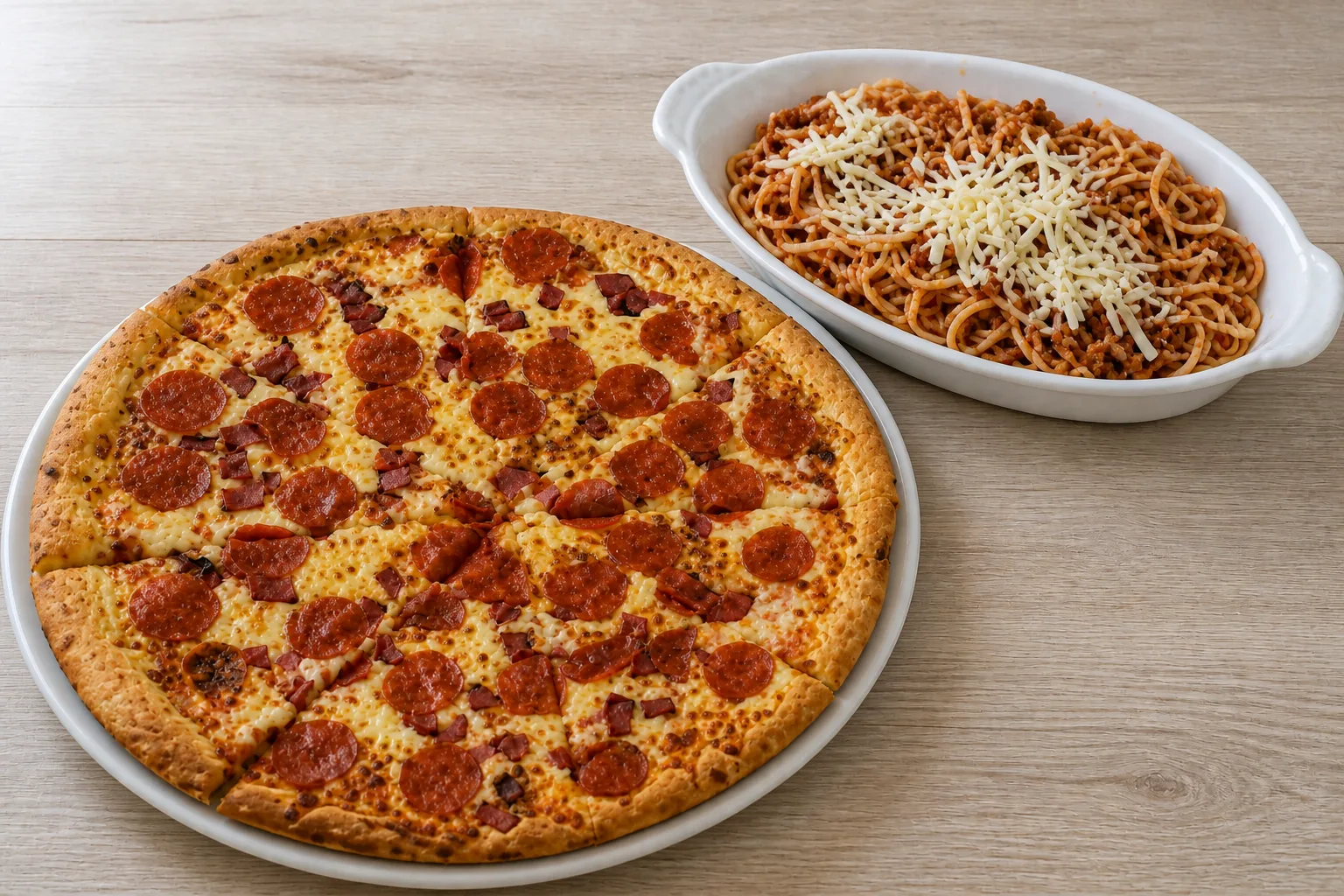
Most cuisines lean on shapes that behave similarly. Italian does not. Its two anchor products crop in opposite directions, and a shooting decision that suits one actively damages the other.
A circle and a spread, on the same menu
A pizza is a compact subject: as wide as it is tall, shot from overhead. It sits perfectly in DoorDash's 1:1 thumbnail and leaves roughly a third of the mandatory 16:9 frame as background on either side. Working notes on that trade-off are on the pizza page.
A plate of pasta, or an antipasto board, is a wide spread. It fills the 16:9 comfortably and loses its outer edges the moment the square thumbnail crops it — the problem the salad page works through, because a dressed spread behaves the same way.
Desserts are the third shape and the least discussed: tiramisu and layer cakes are stacked, and a stack only reads from the side. The cake page covers why the cut face, not the top, is the informative view.
The practical consequence is that "shoot the whole menu the same way" is not available to an Italian restaurant. Overhead is right for pizza and wrong for the desserts. A wide frame is right for pasta and wasteful for pizza. What has to stay constant is the light and the surface; the angle is a per-shape decision, made three times rather than once.
Fifteen pizzas that are fifteen circles
DoorDash lists duplicates among its eleven named rejection reasons: every unique menu item needs its own photo, and reuse is permitted only for the exact same item — its example being a Beef Taco and a Chicken Taco, near-identical products that still need separate images. The full list and its sources are in our DoorDash photo requirements guide.
A pizza menu is that example at scale. Margherita, marinara and quattro formaggi are three discs of the same diameter on the same board. Photographed identically from overhead, they are three pictures of a circle with slightly different colour noise on it.
The separation has to come from the topping, which means the topping has to be legible at the size a thumbnail actually displays. Two things do most of the work: shoot close enough that the individual elements have real size in the frame rather than filling it edge to edge, and let the topping distribution be genuinely different between pizzas rather than styled into the same even scatter.
Pasta has the same problem in a duller register — most red sauces are the same red, and most long pasta is the same tangle. The distinguishing feature is almost always what sits on top, so put it where the 1:1 crop keeps it: centred, not at the rim.
The reheat window is a menu-planning problem
Cheese is the constraint that shapes an Italian shoot's schedule. Molten mozzarella has a glossy, stretched surface and a defined edge; as it cools it sets into a matte, slightly wrinkled skin, and the difference is visible at thumbnail size. Pasta does the same thing more slowly — the sauce thickens against the plate and the surface loses its sheen.
There is no lighting fix for either, and reheating produces a different-looking product than the one that leaves your kitchen, which is the territory DoorDash's misrepresentation rule covers.
So the order of the shoot is decided by the food, not by convenience: cold and stable items first — the desserts, the antipasti, the salads — with the camera framed and exposed on a stand-in. Hot items last, one at a time, straight out of the oven into a frame that is already set.
Find the framing error on item two
Shoot one pizza and one pasta before committing to anything else, and look at them side by side at the size a phone displays them. If the pizza looks stranded in its frame or the pasta has lost its edges, the framing decision is wrong and you have found it on item two rather than item twenty.
See how MenuFactory works — the cheese window is the real constraint in an Italian kitchen, and it is the one that stops applying when the light is decided after the shot rather than during it.