AI Cake Photography for Delivery Menus
Uber Eats bans text in item photos and then exempts text on the food itself, so the piped Happy Birthday passes. What gets a cake rejected is everything else in the frame.
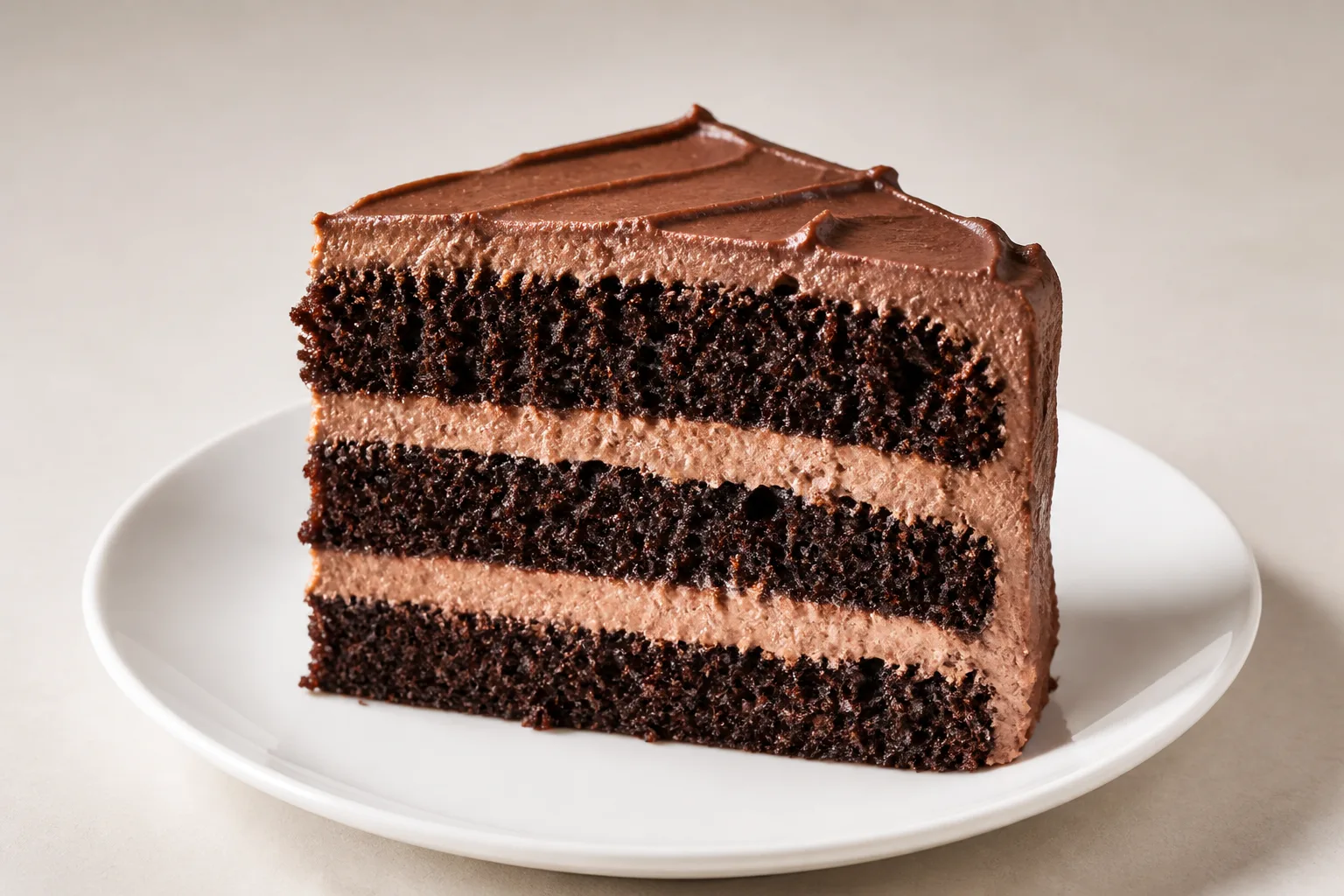
Uber Eats item photos must not contain text or words. Cakes, uniquely among everything on a delivery menu, frequently have words piped onto them in buttercream — and those words are fine. The exception is printed directly under the rule, which is where most guides stop reading.
The text rule, and what it actually rules out
The rule has two halves, and the second one is the half that governs cakes. Item photos must not "Contain any text/words" or "Contain logos or watermarks", with "Exceptions for logos/text on food items the merchant sells or on packaging/plating, but no profanities allowed."
Piped lettering is text on a food item the merchant sells. A celebration cake reading Happy Birthday is compliant. So is a message written across a chocolate plaque, because the plaque is food, and so is the bakery's name printed on the box lid, because the box is packaging. DoorDash grants the same latitude in one clause instead of two: logos and text are acceptable there "only when they physically exist on the item."
What the rule does rule out is everything in the frame that is neither the cake nor its packaging: a watermark, an agency proof mark, a price or a promotion composited on afterwards, a printed card propped behind the slice, the shop's signage in the background. The official exception names three carriers and only three — the food, the packaging, the plating — so anything you cannot place in one of those three should come out of the frame rather than be argued about.
One limit here belongs to Uber Eats alone. Its exception ends with "but no profanities allowed", and novelty cakes are the single category on a delivery menu where that clause does real work. For those, the lettering that sells the cake is the lettering that fails the rule, and no amount of lighting or cropping fixes it:
- Photograph the undecorated version of the same cake, and put the wording in the item text where it is not a photo rule at all.
- Use a decorative-only top — a plain chocolate collar, fruit, a piped border with no lettering — as the menu image, with the customisation offered as an option.
Whole cake or slice is a crop decision
A whole cake is a compact subject at eye level: a cylinder roughly as wide as it is tall. It sits well in the square thumbnail, wastes the 16:9, and dies in the 4:1 header, exactly like a burger.
A slice is a wide, wedge-shaped subject with a cut face. It fills the 16:9, loses its point in the square crop, and survives the 4:1 band well because the band lands on the layers.
The layers are the argument for the slice. A whole frosted cake is an opaque cylinder — you cannot tell a three-layer cake from a one-layer cake from outside. The cut face is the only view that proves what you are selling, which is the same reason a club sandwich has to be photographed from its cut side.
Sell whole cakes and you need both: a slice for the item photo, a whole cake for the customer to understand what arrives.
What each platform's crop does to a slice
The item specs below are the platforms' own, checked against their published pages on 2026-08-15 (source list in our DoorDash photo requirements guide).
| Platform | Item ratio | What a cake slice loses |
|---|---|---|
| DoorDash | 16:9 landscape only | Nothing — a wedge fills a wide frame |
| DoorDash thumbnail | centre-cropped to 1:1 | The point of the wedge, if it runs edge to edge |
| Uber Eats | 5:4 to 6:4 | Little at 6:4 |
| Grubhub | 4:3 | Nothing |
| Grubhub desktop header | cropped to 4:1 | Little — the band lands on the layers |
Angle the slice diagonally rather than laying it point-outward across the frame, and the square crop keeps the whole wedge.
Buttercream shows every degree of room temperature
Frosting holds a piped edge cold and slumps warm, and the boundary between layers softens into a smear as it goes. There is no lighting or editing fix once it has moved — and continuous lighting, sitting on the slice for the length of a shoot, is what pushes it over.
Cut the slice cold, shoot immediately, and keep the light off between takes.
The shot that covers all five crops
Shoot one master at 4:3, at least 2400 × 1800 px, slice angled diagonally with the cut face toward the camera, nothing in frame but the cake and its plate, cold buttercream, soft side light.
See how MenuFactory works — buttercream does not slump in a generated frame, which is why cakes are one of the dishes where the shooting window stops being the constraint.