AI Burrito Photography for Delivery Menus
A wrapped burrito is a beige cylinder that photographs as nothing. Everything a customer is buying is inside it, and the only way to show that is a cut end.
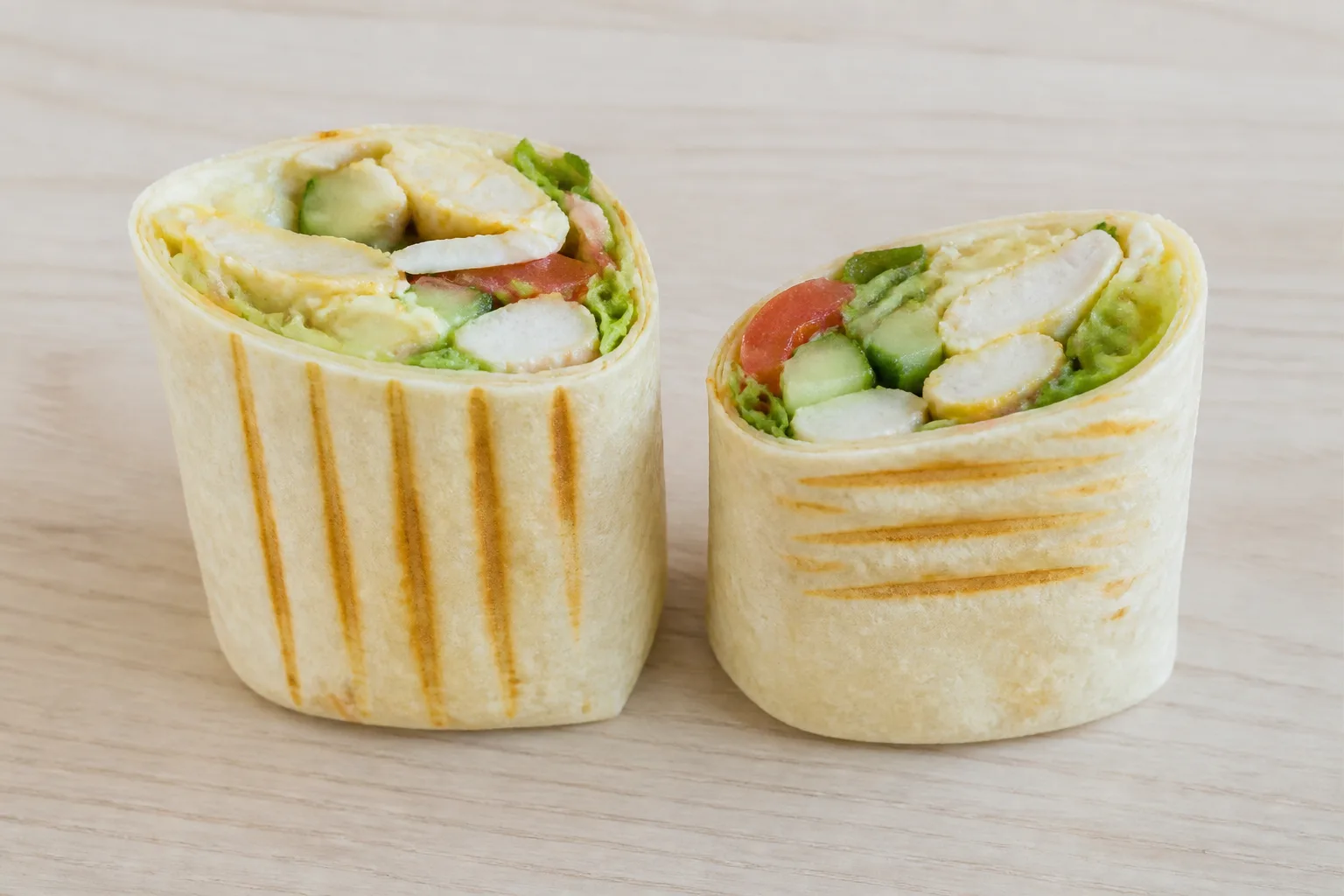
A burrito is the hardest thing on a Mexican menu to photograph, and the reason is simple: from the outside it is a smooth beige cylinder, and every burrito on every menu looks exactly like every other one. The product is entirely concealed by its own packaging.
The cut end is the only informative view
Standing a burrito on its end, cut face to the camera, is the shot. It is the only composition that shows rice, beans, protein and cheese as distinct things, and the only one where two burritos on the same menu look different from each other.
This puts burritos in the same territory as steak: the informative photograph shows the item cut, and DoorDash's rules include a misrepresentation clause requiring the image to represent the item as served. The resolution is the same one, and it is easier here than for steak — many burrito menus already cut and wrap in halves for delivery, in which case the cut photograph is the honest one. If yours arrives whole, cut it in the photo only if you are prepared to cut it in the box.
The middle path that works: photograph the whole burrito and a cut half in the same frame, standing behind it. That composition shows the product as served and what is inside it, and both objects are the same menu item — which is all Uber Eats' one-item rule asks, its own example of a violation being a pizza photo that also contains hamburgers.
What each platform's crop does to a burrito
The item specs below are the platforms' own, checked against their published pages on 2026-08-15 (source list in our DoorDash photo requirements guide).
| Platform | Item ratio | What a burrito loses |
|---|---|---|
| DoorDash | 16:9 landscape only | Nothing — a cylinder lying down fills a wide frame |
| DoorDash thumbnail | centre-cropped to 1:1 | Both ends, which are the only informative parts |
| Uber Eats | 5:4 to 6:4 | The ends at 5:4 |
| Grubhub | 4:3 | Little |
| Grubhub desktop header | cropped to 4:1 | Little — a lying burrito is a natural horizontal band |
That second row is the whole crop story. A burrito lying flat is a long horizontal object, and the square thumbnail cuts precisely the two ends where all the information is. Stand it up instead: an upright half is a compact subject that keeps its cut face dead centre in every crop including the 1:1.
Foil raises the logo rule, and printed foil clears it
Burritos arrive in foil, and printed foil or a branded paper sleeve is standard. That is allowed. Uber Eats bars item photos that "Contain any text/words" or "Contain logos or watermarks", and then hands most of it back: "Exceptions for logos/text on food items the merchant sells or on packaging/plating, but no profanities allowed." Foil and a paper sleeve are both packaging. DoorDash phrases it as a permission rather than a carve-out: logos and text are acceptable there "only when they physically exist on the item."
The test is physical: was it on the burrito or its wrapping when you pressed the shutter? A watermark, a logo composited on afterwards and a printed card propped behind the plate all fail it. The closing clause, "but no profanities allowed", belongs to Uber Eats alone, which is worth a second look on a sleeve that carries a slogan rather than a name.
Plain foil is still worth choosing on looks alone — it reflects light in a way that reads as freshly wrapped. That is now a preference, not a compliance requirement.
Foil is also a reflection problem
Aluminium is a mirror with texture. It picks up the light source, the ceiling, and the colour of whatever is nearby, and at thumbnail size a hot reflection on foil is a white blank. Use a large soft source well off to one side, and crumple the foil deliberately — a wrinkled surface breaks a single hard reflection into many small soft ones.
The shot that covers all five crops
Shoot one master at 4:3, at least 2400 × 1800 px, one half standing cut-face-forward with the whole burrito lying behind it, plain unprinted foil, large soft side light. The upright arrangement crops to every ratio above, and the lying burrito behind it gives the 4:1 header something to land on.
See how MenuFactory works — a burrito's problem is that the good shot and the honest shot are not the same shot, and the fix for that is in how you plate it, not in how you edit it.