AI Photography for Turkish Restaurant Menus
Eight kebabs leave a Turkish kitchen on eight copies of the same plate — rice, pepper, tomato, onion, lavash. The one thing that changes between listings is the smallest object in the frame, and that is what a duplicates rejection is made of.
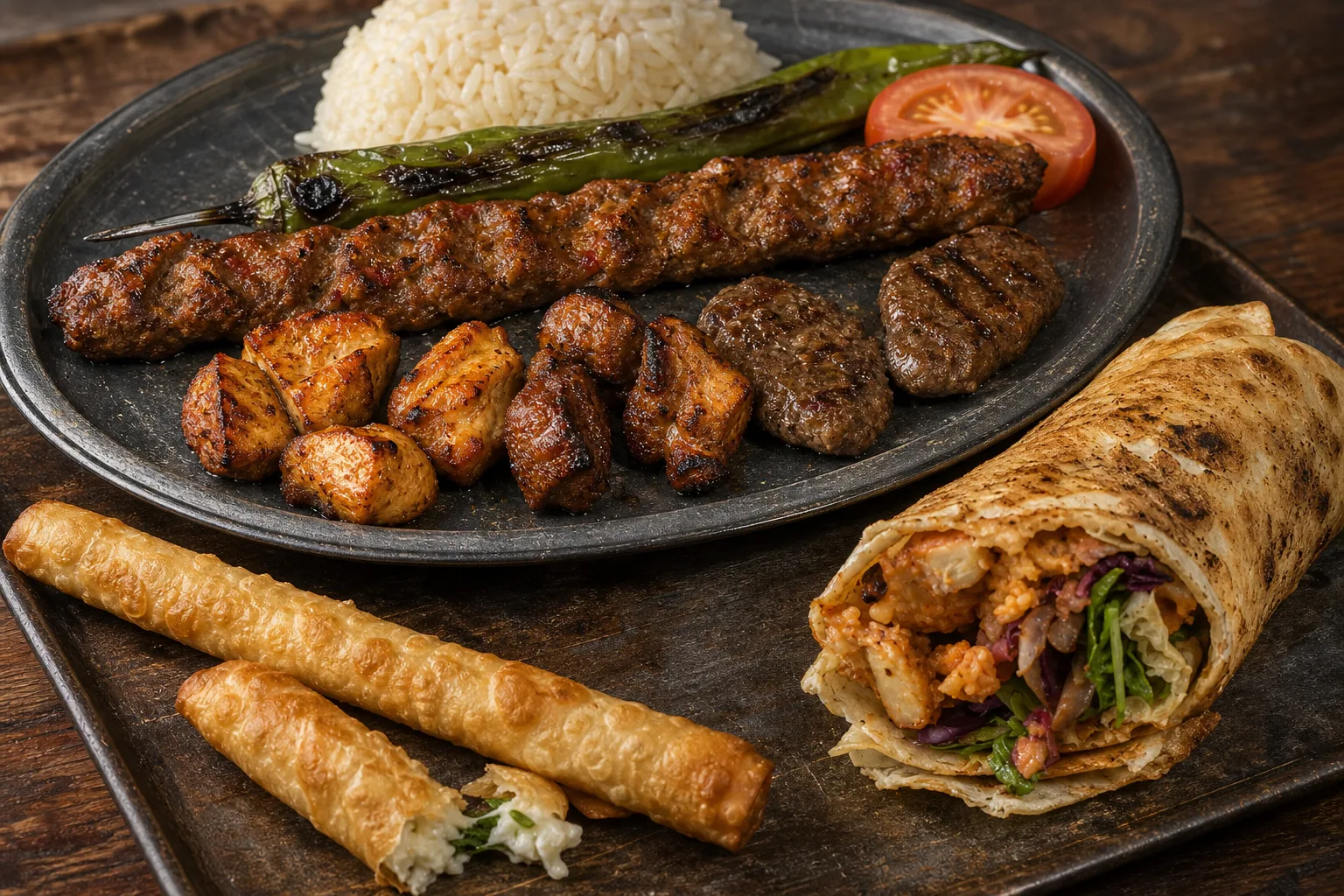
A Turkish grill menu lists eight kebabs, and eight kebabs leave the kitchen on eight copies of the same plate.
Every kebab arrives on the same bed
Adana, urfa, kuzu şiş, tavuk şiş and ızgara köfte are five separately priced listings, and each leaves the pass on the same rice or bulgur pilaf with the same blistered green pepper, half tomato, sumac onion and lavash. The meat is the only variable, and it is the smallest object on the plate.
That hits DoorDash's framing rule from both sides: the item must fill 50% to 70% of the frame, and at least 80% of it must be visible, so cropping in on the meat is not available — the plate is the item. Sources are in our DoorDash photo requirements guide.
The fix is in the plating. Nothing leaves the plate — removing an element for the camera is the misrepresentation reason — but nothing has to sit beside the meat either. Pepper behind the skewer, pilaf at the back edge where the centre-crop to a square thumbnail trims it anyway, and the middle goes to whatever differs.
Geometry is what tells adana from şiş
Adana and urfa are the same hand-pressed minced lamb on the same flat skewer, separated by chilli — which a camera renders as slightly more red. Kuzu şiş is cubes, köfte is pressed ovals, tavuk şiş is paler cubes. The variable is geometry — length, count, edge — and geometry only appears under raking light.
So compose for it. Run the adana's full length along the long axis of the 16:9 frame so it reads as one unbroken ridged cylinder; leave gaps between köfte so they can be counted; turn each şiş cube so a charred corner faces the camera. DoorDash names duplicates among its eleven rejection reasons and permits reuse only for the exact same item; two skewers separated by chilli are not that, and composition is the only place left to put the difference.
The mixed grill and the İskender are this menu's flat spreads: wide, irregular, first to lose their outer edges when a 16:9 upload becomes a 1:1 thumbnail. That crop and the single-item rule that comes with it are on the BBQ platter page.
Lahmacun is flat until someone rolls it
Lahmacun leaves the oven as a thin flat round under a dark layer of minced meat, and it is eaten rolled around parsley, onion and lemon. One listing, two shapes, and the photograph has to pick. Misrepresentation settles it: shoot the format your kitchen boxes. Rolling is what the customer does.
Flat is the harder one. From overhead the topping reads at thumbnail size as a stain, and nothing can be added afterwards — text, graphics and borders are all named rejection causes. Drop to a low angle so the round gains a rim and its blistering catches light, and let the lemon and parsley carry the only saturated colour.
Dürüm runs the other way: döner rolled inside lavash is a sealed cylinder that shows nothing. Why its cut face has to be arranged rather than merely exposed is on the burrito page.
The fried listings differ only on the inside
Sigara böreği, içli köfte and paçanga böreği are three separately priced items and three crisp golden-brown objects the size of a finger. The difference — feta and parsley, spiced mince in a bulgur shell, pastırma and kaşar — is entirely internal. Photograph each with one piece opened, and three interchangeable thumbnails become three items.
The crust is the other half. DoorDash caps a menu item photo at 2 MB, and platforms re-encode what you upload; fine texture is the first thing a lossy encoder discards. The fried chicken page covers the side light and framing distance that get a crisp surface through that pass.
The comparison test is already a menu item
Most menus need a test shoot to find which listings are indistinguishable at thumbnail size. A Turkish grill menu sells that test: the karışık ızgara puts adana, şiş, köfte and tavuk in one frame, at one distance, under one light.
Shoot it first and look at it small. Two geometries you cannot name there will not separate as two listings either, and the answer is a plating decision — a different count, a different length, more char — not a better exposure. It also gives you the number the bill is built from: photographers price per image or per dish, and the advice to shoot only your five to ten signature dishes does not survive a menu whose near-identical listings each need their own file. All three routes are costed in our menu photography cost comparison.
See how MenuFactory works — eight plates that differ by one object in the middle is the work that costs a shoot day by hand and one setup here.