AI Photography for Vietnamese Restaurant Menus
Pho does not arrive assembled. The herbs, sprouts, lime and sauces travel in separate containers — so the iconic photograph of a finished bowl is a picture of something the customer has to build.
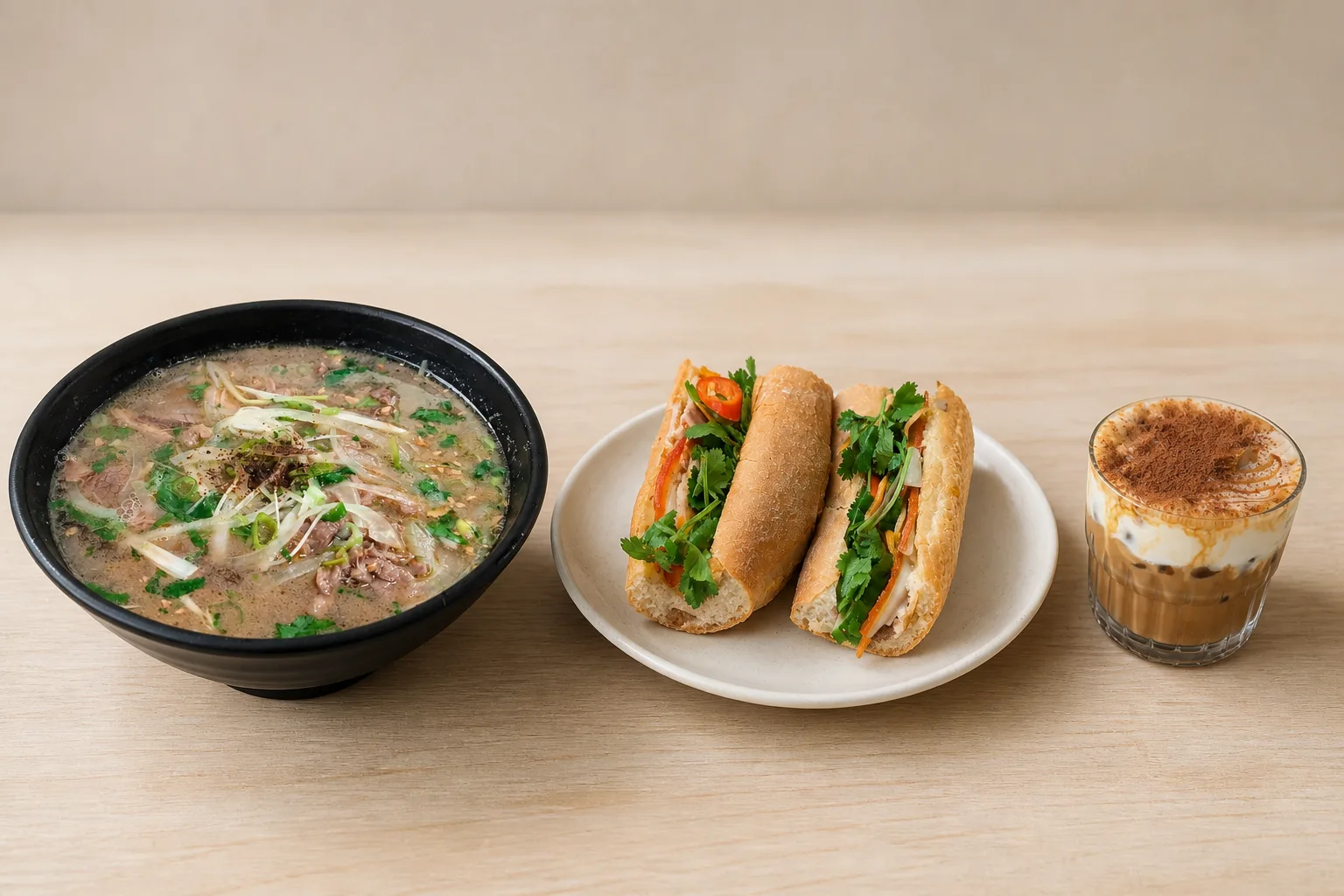
Vietnamese food has an unusual relationship with delivery: its signature dish is designed to be finished by the person eating it. Pho ships as a bowl of broth and noodles with the herbs, bean sprouts, lime, chilli and hoisin in separate containers. What the customer receives is a kit.
The assembled bowl is a photograph of the wrong thing
Two platform rules meet here. Uber Eats requires item photos to be framed in the centre, with items not appearing at the corners or off frame. DoorDash's rejection reasons include misrepresentation: the image must show the dish your kitchen actually sends out. Sources for both are in our DoorDash photo requirements guide.
The classic pho photograph — a steaming bowl with a plate of Thai basil, sprouts and lime wedges beside it — is not several menu items; the garnish plate comes with the pho rather than being ordered. What it trips is the first rule: two subjects, so the bowl is no longer centred and the herb plate sits on the frame line or half outside it. Photographing the bowl fully garnished instead, with everything already stirred in, has the other problem: that is not the state the food arrives in.
The version that satisfies both is narrower than either instinct. Photograph the bowl as it is packed: broth, noodles, protein, the scallion and onion that actually go in the container. Leave the garnish plate out of the frame and let the listing description say what accompanies it. It is a less romantic image, and it is the one that matches the box.
Three shapes, and the third one is the surprise
Noodle soups are deep bowls whose broth depth is the thing that sells them, and overhead is the angle that erases it. The ramen page covers the three-quarter angle and the steam problem, both of which transfer directly to pho and bun bo hue.
Banh mi is a stacked, cut-face subject. A baguette photographed whole is a photograph of bread; the cross section is the only view that shows the pâté, the pickled daikon and carrot, the cilantro and the protein — which is the entire product. That is the same argument as the club sandwich page, and the same fix: cut on the diagonal and turn the cut face to the camera.
Vietnamese iced coffee is the one that catches people out. It is a tall vessel — the worst fit for DoorDash's mandatory 16:9 landscape — but unlike most drinks its product identity is a layer: condensed milk sitting under dark coffee, in a visible gradient. That gradient exists only from the side, which means the overhead angle that rescues most café drinks is unavailable here. The coffee page covers the trade-off; for ca phe sua da the decision is made for you.
Where the near-identical listings are
DoorDash names duplicates among its eleven rejection reasons: every unique menu item needs its own photo, and reuse is permitted only for the exact same item, its example being a Beef Taco and a Chicken Taco.
A pho menu is that case repeated: pho tai, pho chin, pho dac biet and the rest are one broth, one noodle, one bowl, differing only in which cuts of beef sit on top. The cuts are the only thing that can separate the photographs, so they have to be at the surface, facing the camera, and genuinely different between shots — rare slices laid flat, brisket in thicker pieces, meatballs whole.
Everything else in the frame stays identical. When the bowl, the light and the angle are constant, the meat becomes the largest visible difference between two thumbnails. When they drift, it becomes the smallest.
Herbs go in the frame only if they go in the box
Thai basil, cilantro and mint are the freshness signal in almost every Vietnamese photograph, and they are also usually packed separately or, for some listings, not at all.
The rule that keeps this simple: what is in the frame is what is in the container. If the scallion goes in, shoot the scallion. If the basil travels on its own, it is not part of this item photo. This costs the picture some colour and buys the listing the thing a misrepresentation rule is actually protecting.
Banh mi first, pho last
Banh mi first — it is stable, it holds its cross section for as long as you need, and it will tell you whether your light and surface work. Pho last and one bowl at a time, because the noodles keep swelling and the herbs on top wilt against the heat. The iced coffee sits in between and wants the same side-on setup as the banh mi, which is a convenient accident worth using.
See how MenuFactory works — a bowl whose broth reads deep and a baguette whose cross section reads sharp want different light, and reconciling them is the part that does not have to be solved in the kitchen here.