AI Bubble Tea Photography for Delivery Menus
A tall cup is the hardest subject for DoorDash's mandatory 16:9, the easiest for its 1:1 thumbnail, and unusable in Grubhub's 4:1 header. It also puts a printed cup in every frame, which is where the text and logo rules have to be read exactly.
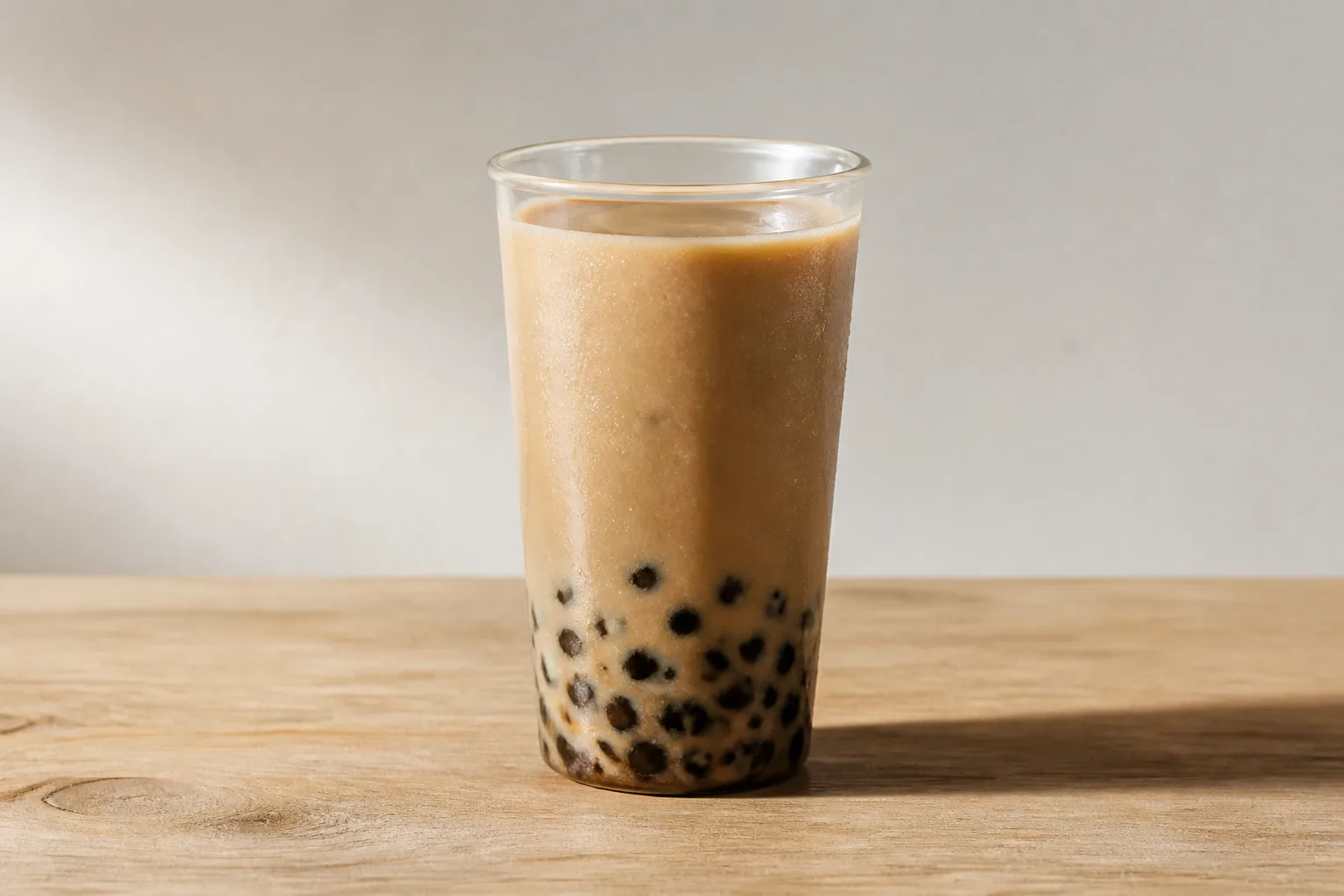
Everything on a delivery menu is photographed in landscape. Bubble tea is the one thing on the menu that is emphatically not landscape, and every crop in the system is a negotiation with that fact.
What each platform's crop does to a tall cup
The item specs below are the platforms' own, checked against their published pages on 2026-08-15 (source list in our DoorDash photo requirements guide).
| Platform | Item ratio | What a tall cup loses |
|---|---|---|
| DoorDash | 16:9 landscape only | Either the top of the cup, or most of the frame to background |
| DoorDash thumbnail | centre-cropped to 1:1 | Less than 16:9 did — a taller crop suits a taller subject |
| Uber Eats | 5:4 to 6:4 | Little at 5:4 |
| Grubhub | 4:3 | Little |
| Grubhub desktop header | cropped to 4:1 | Everything identifying — the band is a stripe of liquid |
16:9 is the worst frame on the platform for this dish, and it is the only one DoorDash accepts. A vertical subject in the widest ratio in the system leaves you two choices: shrink the cup until its full height fits, which surrenders most of the frame to background, or fill the height and lose the lid or the base. Neither is good, and there is no third option — DoorDash publishes 16:9 landscape as the only accepted item ratio.
The 1:1 thumbnail is a reprieve, not a problem. This inverts the usual advice. For most dishes the square centre-crop is where content gets lost; for a tall cup, 1:1 is taller relative to its width than 16:9 is, so the square crop of a centred cup keeps more of the drink than the file it was cut from. Compose for the 16:9 and the thumbnail takes care of itself.
Uber Eats and Grubhub are both kinder than DoorDash here. At 5:4 and 4:3 the frame is closer to the subject's own proportions, and a cup that had to be shrunk to survive 16:9 can sit larger. If you shoot once and export everywhere, the 16:9 is the constraint that sets the composition and the others inherit it.
The 4:1 header is a write-off. A band one-quarter as tall as it is wide, laid across a vertical cup, is a horizontal stripe of liquid. There is no arrangement of a single drink that reads at 4:1. Use a different subject for that slot.
The printed cup, and where the branding rules really land
Almost every bubble tea is served in a printed cup, under a sealed film lid that is also usually printed. So this is not an edge case for drinks, it is the default state of the product — and both platforms allow it. Uber Eats bars item photos that "Contain any text/words" or "Contain logos or watermarks", with one clause qualifying both: "Exceptions for logos/text on food items the merchant sells or on packaging/plating, but no profanities allowed." A printed cup is packaging. DoorDash writes the same boundary as a condition rather than an exception: logos and text are acceptable there "only when they physically exist on the item."
The exception turns on what the camera saw. A watermark, a shop logo composited on afterwards, a price set in an editor and signage behind the counter were none of them on the cup, and none of them pass. One further limit is Uber Eats' alone. Its exception closes with "but no profanities allowed", and drinks are a category where novelty slogans get printed on cups and lids, so that is the wording to read twice.
Which leaves the choice of cup as a picture decision rather than a compliance one. A clear cup shows the pearls and the line where milk meets tea, and a printed panel covers the part of the drink the customer is buying. If you do turn a printed face away from the camera, check the film lid: a sealed lid is a mirror, and it picks up text the cup itself has rotated out of shot.
The shot that covers four of the five crops
Shoot one master at 4:3, at least 2400 × 1800 px, cup centred with margin above the lid and below the base, a clear vessel, even light. Export the 16:9 from it last and check that the lid and base both survive — if they do not, the master was framed too tight for the ratio that matters most.
See how MenuFactory works — a vertical subject is the case where generating each ratio separately beats cropping one file down, because the 16:9 and the 5:4 want genuinely different framings of the same cup.