AI Cocktail Photography for Delivery Menus
A cocktail's garnish is what identifies it, and it sits above the rim — exactly the part a tight 16:9 crop removes from a tall glass. Glass also reflects the room you shot it in.
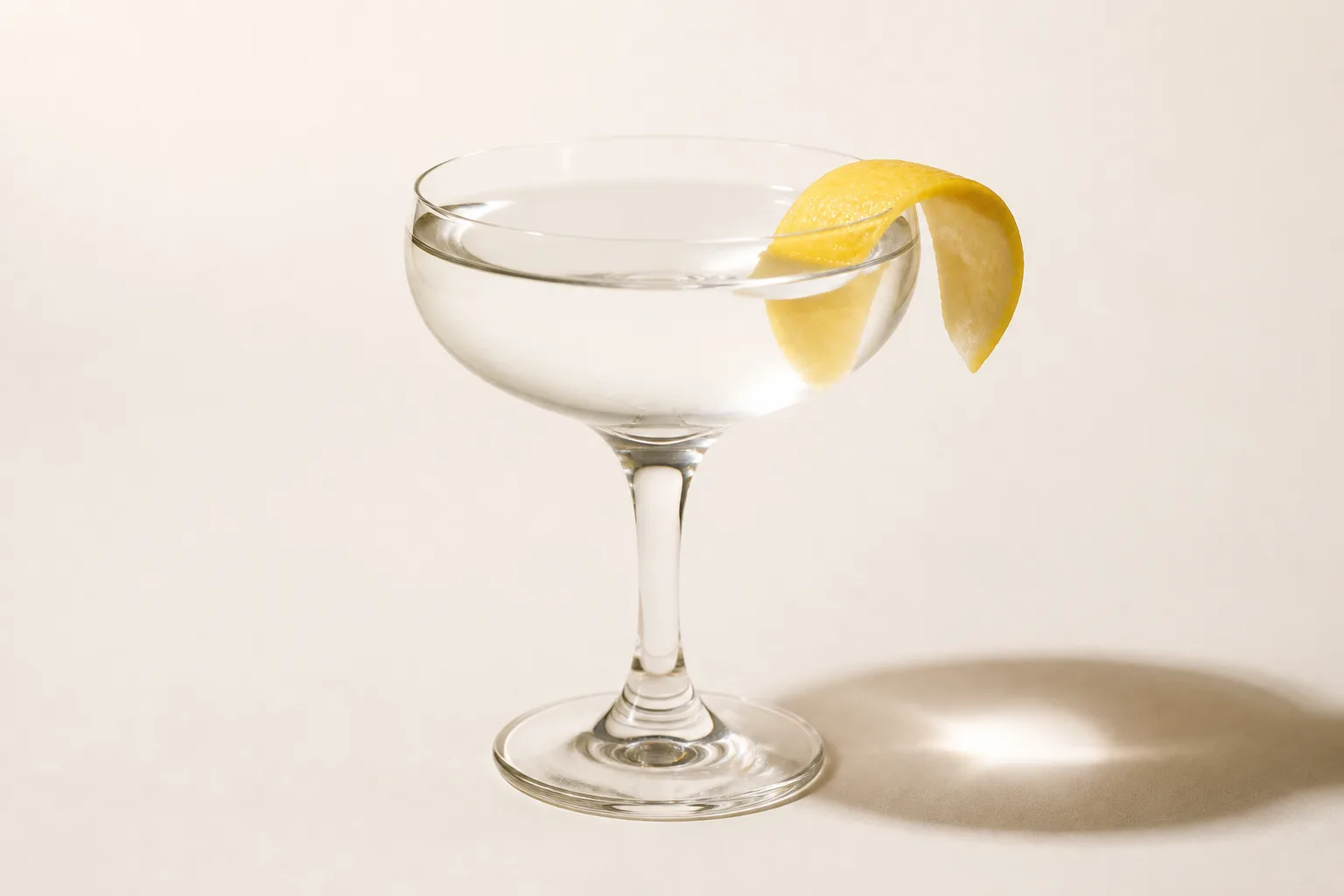
Two cocktails can be the same colour in the same glass and be completely different drinks. What distinguishes them is the garnish — and the garnish is the part that sits above the rim, which is the part a tall subject loses first in every crop the platforms apply.
What each platform's crop does to a stemmed glass
The item specs below are the platforms' own, checked against their published pages on 2026-08-15 (source list in our DoorDash photo requirements guide).
| Platform | Item ratio | What a cocktail loses |
|---|---|---|
| DoorDash | 16:9 landscape only | The garnish, or the stem, unless the glass is shot small |
| DoorDash thumbnail | centre-cropped to 1:1 | Less than 16:9 did — a taller crop suits a taller subject |
| Uber Eats | 5:4 to 6:4 | Little at 5:4 |
| Grubhub | 4:3 | Little |
| Grubhub desktop header | cropped to 4:1 | Everything identifying — the band is a stripe of liquid |
A cocktail has the same problem bubble tea has, with one extra turn of the screw: bubble tea's identity is in the drink, which sits in the middle of the frame, while a cocktail's identity is in the garnish, which sits at the top. So the vertical crop does not merely make the composition awkward — it removes the information.
The practical rule: frame the 16:9 around the garnish and the top two-thirds of the glass, and let the base of the stem fall outside. A cropped stem still reads as a cocktail. A cropped garnish reads as a glass of something.
Glass reflects the room, and thumbnails make that worse
Every curved glass surface is a mirror. A coupe photographed in a working bar reflects the bar: the light fixtures, the bottles, the person holding the camera. At full size those reflections read as depth. At the thumbnail size the platforms display, they read as dirt.
Shoot against a large, plain, evenly lit surface with nothing between the light and the glass, and check the reflection at thumbnail size rather than at full size. A reflection you have to zoom in to notice is fine. One you can pick out in the list view is not.
Ice is the same problem with an added clock: it goes cloudy and starts to shrink from the moment it is in the glass, and cloudy ice kills the transparency that makes a clear drink look clean.
Two content rules that hit drinks
Text and logos on Uber Eats. The ban on text, logos and watermarks carries an exception for "logos/text on food items the merchant sells or on packaging/plating", so an etched glass — the vessel the drink is served in — is not what fails. A branded coaster and a printed napkin under the glass are neither the drink nor what it was served in. Take those out of the frame rather than argue them. The same clause ends with "no profanities allowed", which is the one line a novelty glass can still cross.
Single item on Uber Eats. The rule bars a photo showing more than one menu item, and its own example is a pizza photo that also contains hamburgers. A shaker or a jigger is not a menu item, so it does not trip this. Two different cocktails in one frame do, and so does the drink beside the bottle it was made from if you sell that bottle by the bottle. What catches the rest of the standard bar composition is a different rule: item photos must be "framed in the center", with nothing at the corners or off frame.
Also worth checking before you invest in the shoot: alcohol delivery is regulated separately on every platform and not enabled for every merchant in every market. Confirm your menu can carry the item at all before you photograph the menu.
The shot that covers four of the five crops
Shoot one master at 4:3, at least 2400 × 1800 px, glass centred with generous margin above the garnish, plain unbranded glassware, one large soft source, fresh ice, nothing else in frame. The 4:1 header is not achievable from a single tall glass.
See how MenuFactory works — reflections and ice clarity are the two things that go wrong between the first ratio and the last, and neither of them degrades in a generated frame.