AI Photography for Bar and Pub Menus
A bar's lighting is the thing it spent money on, and it is the single worst condition to photograph food in. The room you are proud of is also what the platforms' background rule rejects.
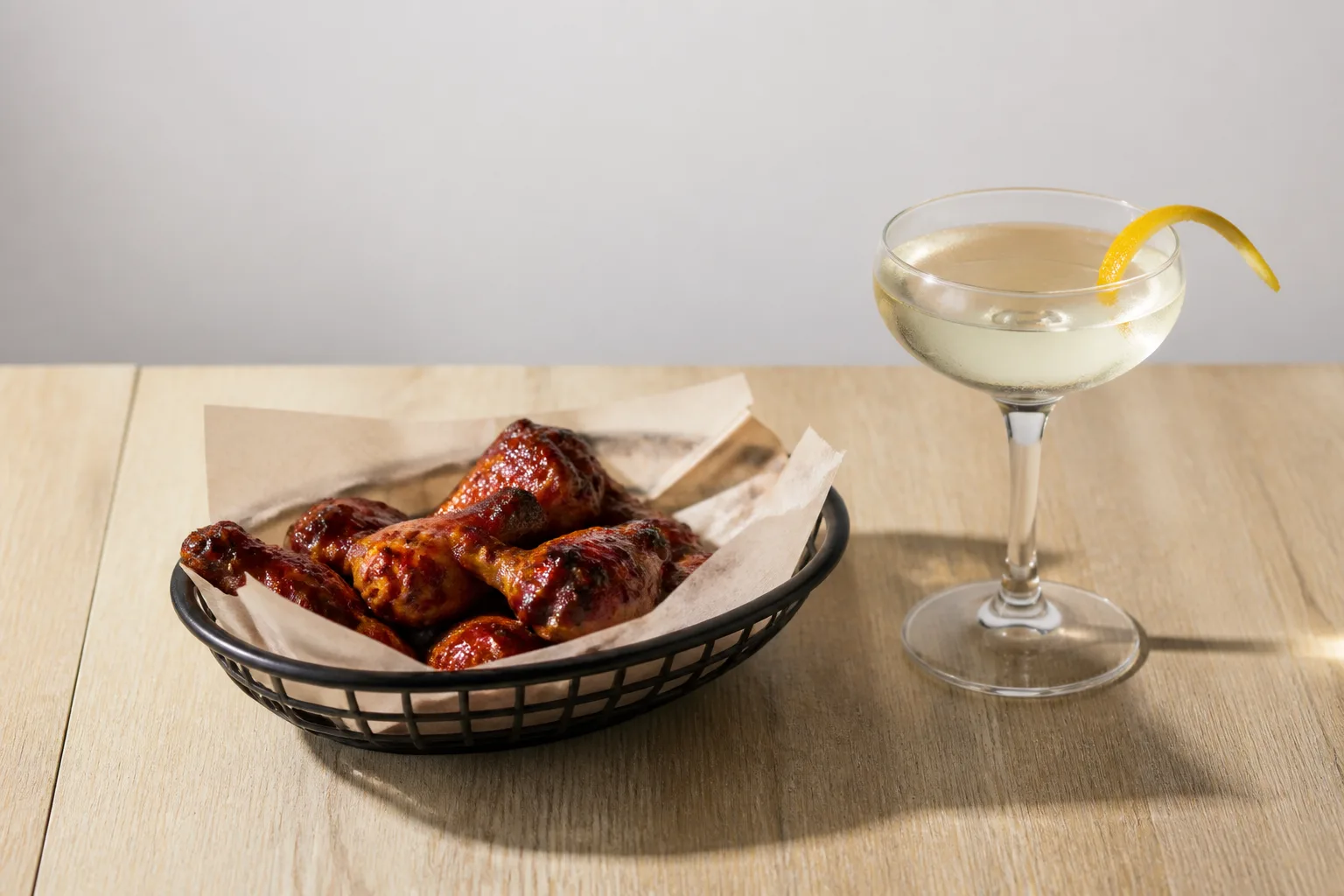
Bar food is photographed in bars, and that is the whole problem. A bar's lighting is deliberate, low, warm, coloured and directional — every property that makes food photograph badly — and the atmospheric background behind it is precisely what the platforms rule out.
Your room is the background rule
DoorDash's rejection reasons include background, and its requirement is simple, non-distracting and natural. It also names lighting as its own separate reason. Composited backgrounds and solid colour fills are explicitly cause for rejection, so cutting the dish out onto a flat colour is not the workaround it looks like. Sources are in our DoorDash photo requirements guide.
A photograph taken on the bar top, with bottles and pendant lights behind it, fails on both counts at once. It is also the photograph almost every bar takes, because it is the one that looks like the business.
The separation worth making: your room belongs in your storefront header and gallery imagery, where atmosphere is an asset. Item photos are a different job — they are read at thumbnail size in a grid, next to competitors, by someone deciding what to eat. Shoot those somewhere with a large window and a plain surface, in daylight, before service.
Three shapes, and two of them fight each other
Shared plates — wings, nachos, loaded fries, sliders — are the scattered-multiple case, where a square crop trims the outer pieces and changes how much food the customer sees. Heaping rather than spreading is the fix, on the wings page.
Fried items are crisp textured surfaces whose fine detail is the first thing lossy compression discards, and they need a low raking light to keep it. That is the fried chicken page.
Drinks are tall vessels, the worst fit for DoorDash's mandatory 16:9 landscape, and glass reflects the room back at the camera. The cocktail page covers both.
The conflict is between the second and third. Fried food wants a smallish, low, hard-ish source so its texture casts shadows across itself. Glass and ice want a large soft source so the reflection is a gradient rather than a hard bright shape. Shot under one compromise setting, the food looks flat and the glass looks dirty. These are two setups, and trying to make them one is the most common reason bar menus look worse than the food is.
Check whether you can sell the drink before you photograph it
Alcohol delivery is regulated separately on every platform and is not enabled for every merchant in every market. It is worth confirming that your menu can carry the item at all before investing a session in photographing the cocktail list.
Two content rules also hit drinks harder than food, though not where most guides put them. Uber Eats bans text, logos and watermarks in item photos and then exempts "logos/text on food items the merchant sells or on packaging/plating", so an etched glass is the vessel and passes; a branded coaster and a printed napkin are neither the drink nor its packaging nor its plating, and those come out of the frame. DoorDash arrives at the same place from its own wording. And Uber Eats' single-item rule counts menu items rather than objects: two different cocktails in one frame are two items, a drink beside the bottle it was made from is two only if you also sell the bottle, and two servings of the same drink are one.
Ice has a clock on it
Ice starts clouding and shrinking the moment it is in the glass, and cloudy ice destroys the transparency that makes a clear drink read as clean. There is no recovery from it in editing.
Frame, focus and expose on an empty glass first. Build the drink, set it down, shoot immediately. This is the same discipline a café needs for latte art, and for the same reason: the subject is degrading from the moment it is finished.
Two shoots, not one
Shoot the food and the drinks on different days, or at least with a deliberate relight between them, and do both in daylight rather than in service lighting. If your wings and your cocktail were shot under one setting, one of them is compromised — and it is usually both.
See how MenuFactory works — two incompatible lighting setups is a real scheduling cost for a bar, and it is the constraint that stops applying when the light is applied after the shot.