AI Photography for Filipino Restaurant Menus
Adobo, kaldereta, mechado, afritada and menudo are five dishes at five prices that photograph as one brown bowl — often with the same pork in all five, which removes the fix every other menu uses.
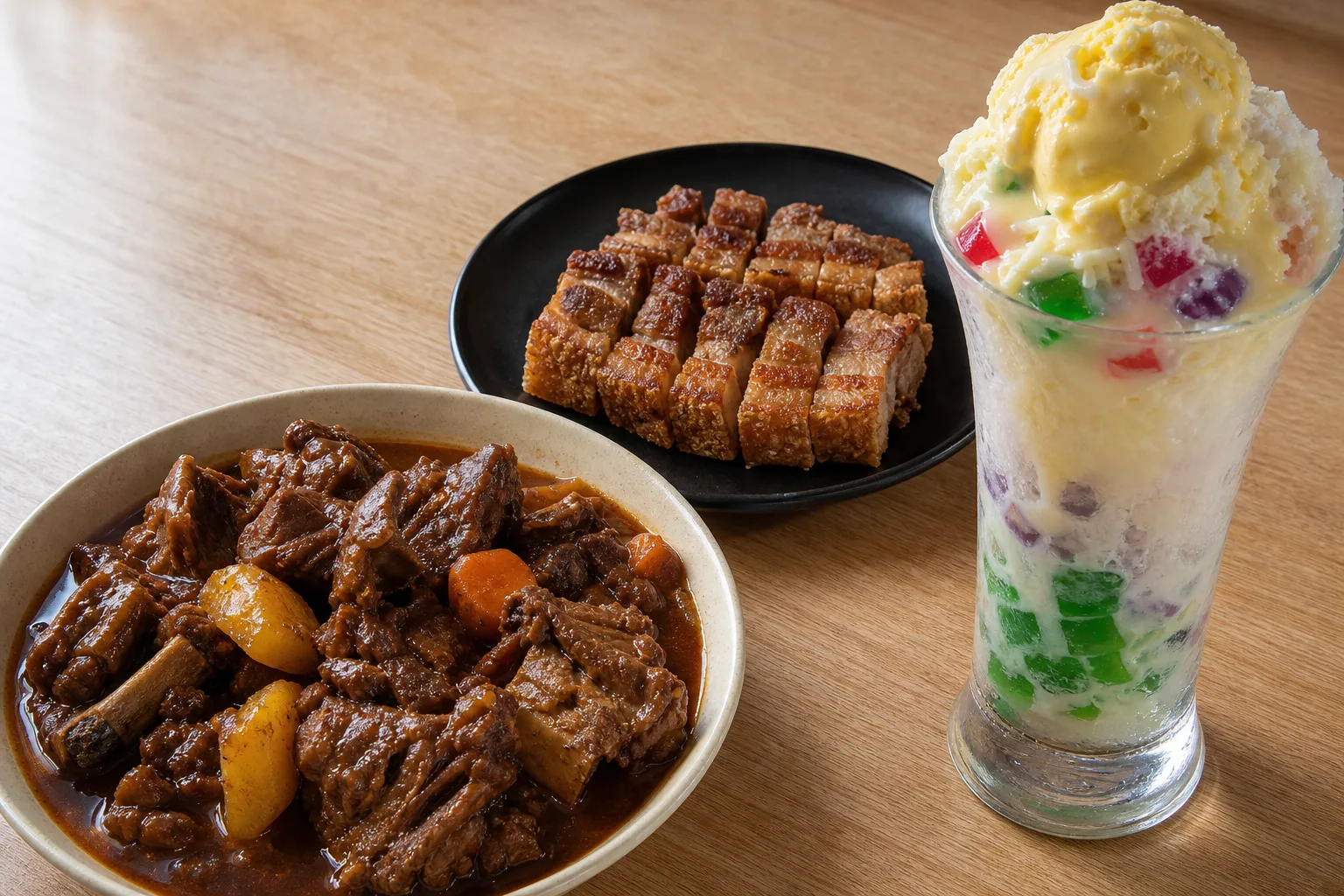
Adobo, kaldereta, mechado, afritada and menudo are five recipes at five prices, and ladled into the same bowl they are five brown stews — often the same pork in all five.
Surfacing the protein separates nothing here
DoorDash names duplicates among its eleven rejection reasons: every unique menu item needs its own photo, and reuse is permitted only for the exact same item — its published example being a Beef Taco and a Chicken Taco. Sources are in our DoorDash photo requirements guide.
Most menus answer that with the protein — one sauce with chicken and one with beef separate at the surface. That does nothing for pork adobo against pork menudo, where the protein is the constant and the dish is the variable, and nothing for kaldereta against afritada, which share a tomato base as well.
What separates them is geometry, not colour
The differences are real, just not chromatic. Menudo is diced small, with liver and raisin. Mechado is a large braised chunk with potato and carrot in wedges. Afritada shows strips of red and green pepper. Kaldereta is heavier and studded with olives. Adobo has no tomato at all.
Those are differences of size, count and edge — the class that survives the 1:1 thumbnail DoorDash centre-crops out of your 16:9 upload. A shift in hue between two tomato braises does not.
So the plating decision is which piece of geometry surfaces: a potato wedge broken above the sauce line, one pepper strip where the light hits it, the olive left visible. Lift nothing that would not surface on its own — that is the misrepresentation rule. The curry page covers the angle and where the rice goes.
Lechon and pancit are the wide half of the menu
The flat spreads stop wasting frame: sliced lechon kawali, inihaw skewers and a tray of pancit bihon are wide subjects in a system whose only accepted DoorDash ratio is 16:9 landscape.
Grubhub crops its desktop header out of a 4:3 file down to 4:1, and a row of skewers is one of the few subjects that reads in a band four times wider than it is tall — the BBQ platter page makes that case, and the reason to block the pieces into a square rather than a line so the 1:1 thumbnail keeps the count.
The egg is part of the item name, not a side
In tapsilog, tocilog and longsilog the -si- is sinangag, garlic fried rice, and the -log is itlog, the fried egg. Two-thirds of the name is the rice and the egg.
Uber Eats requires item photos to show a single item. DoorDash's rule is narrower: it bars a photo of several items sold separately, and excepts items sold together as a bundle, which a silog plate is.
The move other combination plates make — entrée alone, description carries the rest — backfires here: tapa is already its own listing with its own photo, so that image is a duplicate and drops two of the three things ordered. Shoot the plate as it ships for DoorDash and Grubhub; let the tapa, tocino and longganisa listings carry the Uber Eats pictures.
Halo-halo keeps its identity above the rim
Everything that names a halo-halo — ube ice cream, leche flan, jackfruit, the purple itself — sits on top of the mound, above the rim. The bottom of the glass is shaved ice and milk.
You would want to crop the base, and two DoorDash rules forbid it: at least 80% of the item must be visible, and it must fill 50% to 70% of the frame. A tall glass shown whole in 16:9 cannot do both — the bubble tea page works through that collision. So make the mound worth the width: crowned high and spread wide, the broadest part of the subject also the part that names it.
Cutting the glass out onto a clean field is no escape: DoorDash names solid colour fills and composited backgrounds as causes for rejection, and glass with ice is the hardest subject for automatic removal — why a cutout alone is not enough covers both. Shoot on a plain real surface, once, before the mound collapses.
Sort the five bowls before you light anything
Ladle adobo, kaldereta, mechado, menudo and afritada into identical bowls and look at all five from the camera position before touching a light. If you cannot sort them by eye, no exposure will separate them at thumbnail size — the difference has to go onto the plate first. Then shoot the five consecutively without moving anything.
See how MenuFactory works — five brown bowls only stay apart under identical light, and holding that light identical across five days of service is what stops being your problem here.