AI Photography for Mexican Restaurant Menus
Rice, beans and salsa arrive with almost everything on a Mexican menu — and none of them is a second menu item, so the single-item rule is not what catches this cuisine. The framing and fill rules are, and the plate you actually serve is still not the photo you upload.
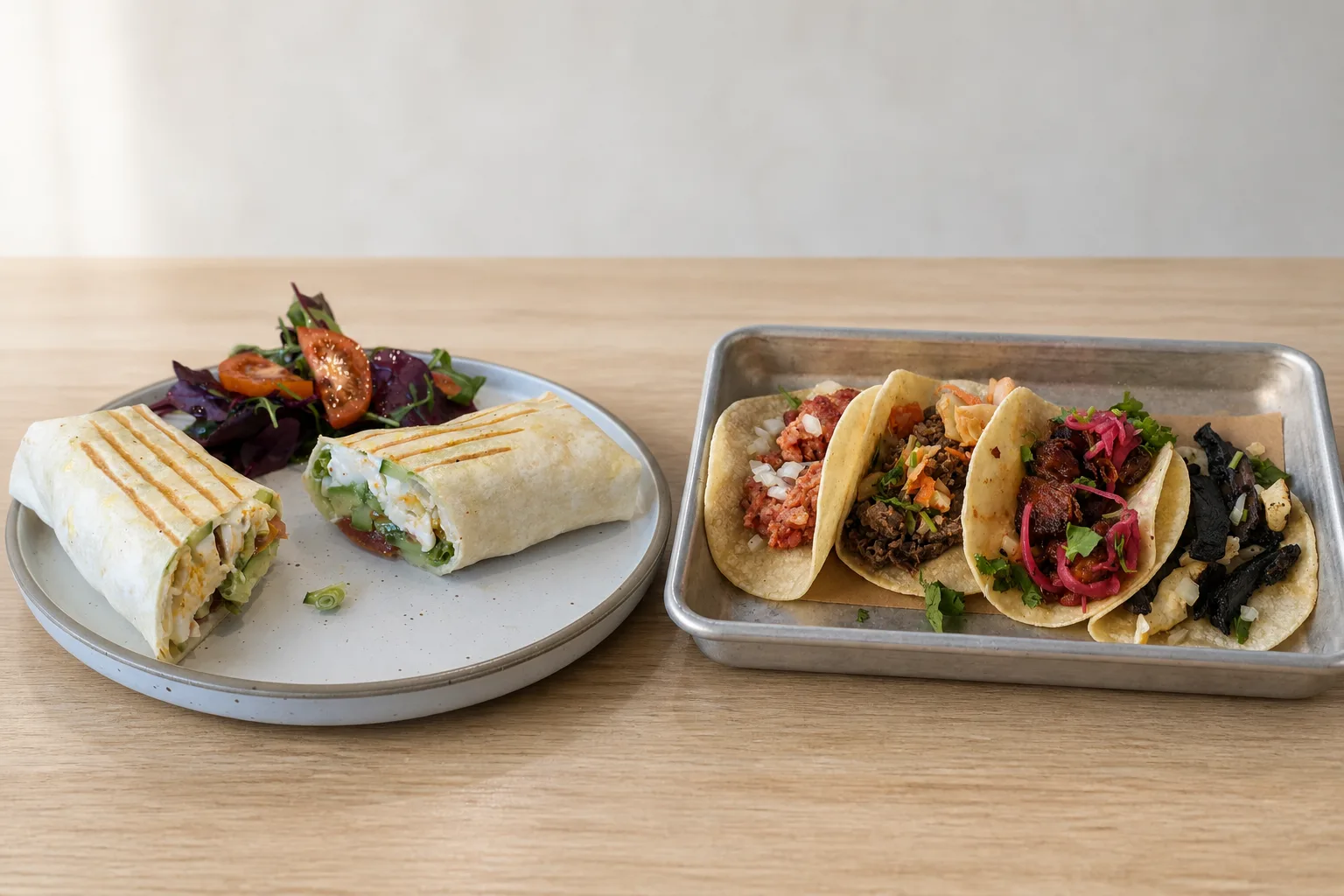
A Mexican menu is built from two silhouettes: things rolled into a cylinder, and things served as several separate pieces. Burritos, chimichangas and taquitos are the first. Tacos, flautas and enchiladas are the second. Both are straightforward to photograph on their own. What complicates them is everything the plate arrives with.
Rice and beans are not a second listing, and they still cost you the frame
Uber Eats bars text or words, logos and watermarks in item photos, and the line directly beneath that list excepts logos and text on the food the merchant sells, on packaging and on plating, with no profanities allowed — materially the carve-out DoorDash grants for a logo that physically exists on the item. Its single-item rule is narrower than its name too: the wording bars a photo containing "more than 1 single item", and the example Uber prints beside it is a pizza photo that also contains hamburgers, which is about mixing different menu items rather than counting objects. What it does require separately is that items be framed in the centre and not appear at the corners or off frame. Sources for all three platforms are in our DoorDash photo requirements guide.
Now consider what leaves a Mexican kitchen. A burrito plate is a burrito, rice, beans, and usually salsa and a lime wedge. A taco order is three tacos with cilantro, onion and a side of salsa verde. None of that is a second listing — the sides come with the plate rather than being ordered — so photographing the plate as it is served is not the pizza-and-hamburgers case. What it is is wide.
That is where it gets caught. Spread across a board, the plate pushes food into the corners and off the edge, which is the composition the centring rule names, and it drops the burrito itself well under the 50% to 70% of frame DoorDash asks the item to fill. Shoot only the burrito and you have a compliant photo of an incomplete product. Shoot the plate and both rules are against you.
The resolution most kitchens land on: photograph the item alone for the item photo, and let the listing description carry what comes with it. The sides are what the customer reads about, not what the thumbnail has to prove. It is worth being deliberate about this before the shoot rather than after an upload, because the alternative — a second, tighter pass once the plate shots come back with the burrito occupying a third of the frame — is twice the shoot for the same menu.
Cylinders and pieces, and what each crop takes
A burrito is a wrapped cylinder, and the wrapper hides everything that distinguishes one from another. Cut it and stand it up, and the cross section becomes the whole argument; the burrito page works through why the cut end is the only informative view.
Tacos are the scattered-multiple case: several pieces that the square thumbnail will crop, changing how many the customer sees. That arrangement problem — gather the pieces into a near-square block rather than lining them up — is the same one worked through on the wings page, and the fix transfers directly.
The plate spread, when you do shoot one for a combo listing, behaves like any wide arrangement: it fills the 16:9 and loses its edges at 1:1, which is the ground covered on the salad page.
Everything is the same three colours
DoorDash names duplicates among its eleven rejection reasons, and its official example is drawn from exactly this cuisine: a Beef Taco and a Chicken Taco need separate photographs, because they are different menu items even though they look nearly identical.
That is the whole difficulty stated by the platform itself. Carne asada, al pastor and carnitas are three browns inside the same tortilla. Photographed the same way, they are the same photo three times.
What separates them is the protein at the surface, and the only way it reads at thumbnail size is if the protein is genuinely visible rather than tucked under garnish. Load the fillings so the meat faces the camera, keep the cilantro and onion sparse enough that they do not become the subject, and vary nothing else between shots — same angle, same light, same board. Consistency everywhere except the one thing that differs is what makes the difference visible.
Salsa is a lighting problem before it is a styling one
Wet surfaces reflect whatever is above them. A salsa roja under a small bright source picks up a hard white highlight that reads at thumbnail size as a blown-out patch rather than as sheen — the same failure a glossy sauce has anywhere. Use a large soft source placed off to one side, and check the result at the size a phone shows it rather than at full size.
Two silhouettes, two test shots
Shoot one taco order and one burrito, cut, before doing anything else. Those two cover both silhouettes on the menu. If the taco arrangement survives a square crop with the count intact, and the burrito's cross section reads at thumbnail size, the rest of the menu is the same two decisions repeated.
See how MenuFactory works — it changes the light on the food you actually cooked, which on a cuisine governed by a misrepresentation rule is the only kind of change worth making.