AI Photography for Southern and Soul Food Menus
Half a Southern menu is sides, and sides are the least photogenic food there is: mac and cheese, collards, beans and cornbread are four beige-to-brown masses with no structure to light.
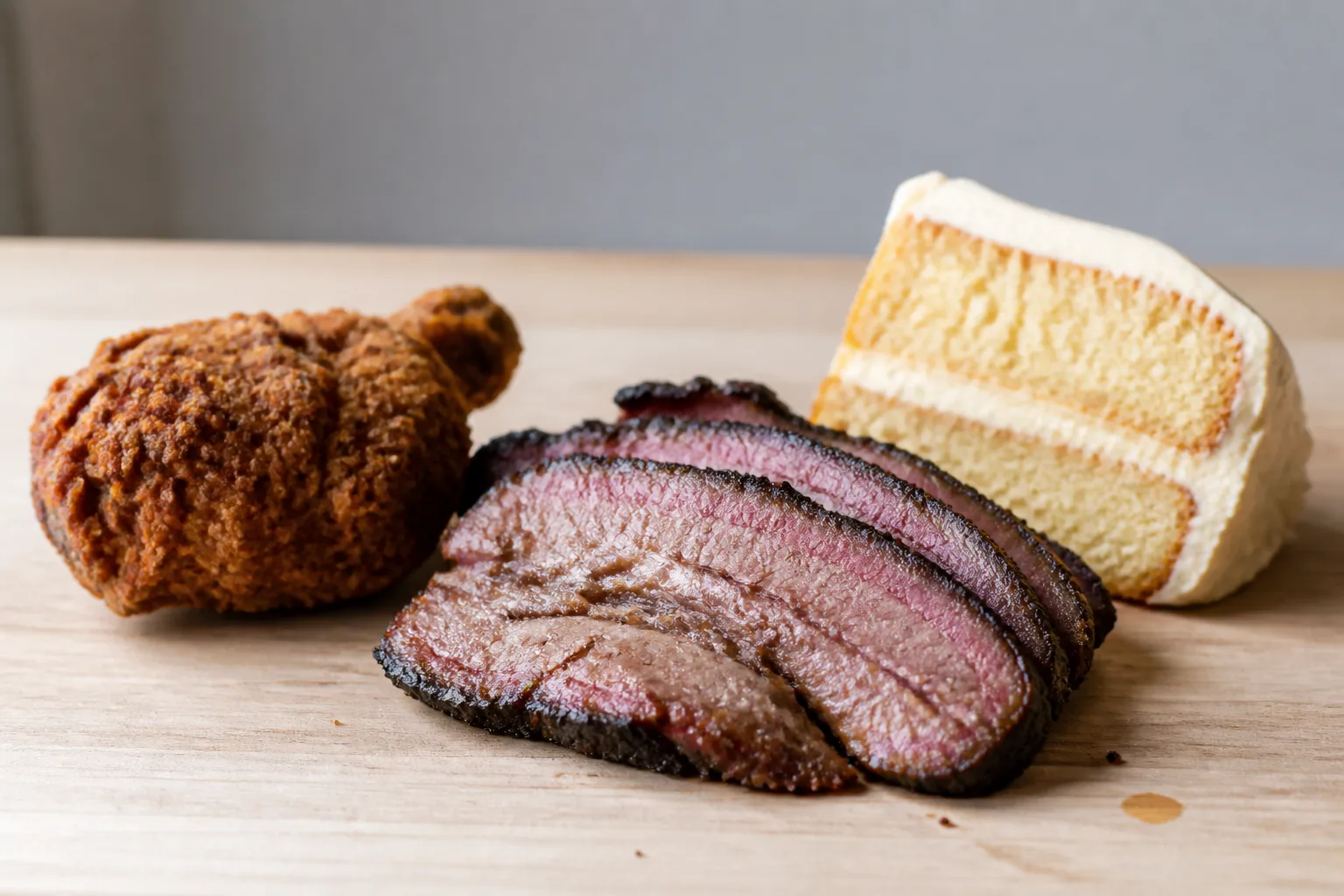
The mains on a Southern menu photograph well. Smoked brisket has bark, fried chicken has crust, a layer cake has layers — all of them are surfaces with structure, and structure is what light works on. The sides are the problem, and on most Southern menus the sides are half the listings and a large share of the revenue.
Sides are the hardest food on any menu to photograph
Mac and cheese, collard greens, baked beans, candied yams and banana pudding share a property that no styling fixes: they have no internal structure. They are homogeneous masses in a container, in a colour range from beige to dark brown, and there is nothing for a light source to model.
Three things genuinely help, and none of them is a trick of angle:
- Give the surface a break in it. A pulled edge in the mac and cheese, a crust corner lifted, a spoon's worth displaced. Any interruption gives the light something to catch and produces the only shadow in the frame.
- Shoot from lower than instinct suggests. Overhead on a homogeneous mass is a flat disc of colour. A low three-quarter puts the container's rim and the food's own surface into the frame together, which reintroduces depth.
- Let the container do some work. A plain vessel with a visible rim gives the eye a boundary and a scale reference. This is not decoration — it is the difference between a photograph of food and a photograph of a colour.
Where a side genuinely has texture, treat it as the subject. Cornbread has a crumb and a crust; collards have leaf structure and a wet sheen. Those are the features the photograph is about.
The mains, in one line each
Smoked meats are a wide spread of sliced protein, and the bark and smoke ring are the entire product claim. Even light flattens both. The BBQ platter page works through why, and where the platter loses its edges in a square crop.
Fried chicken is a crisp surface whose fine texture is the first thing lossy compression discards — the fried chicken page covers the framing and lighting that let it survive re-encoding.
Layer cakes and pies only read from the side, and the cut face is the only view that proves how many layers you are selling. That is the cake page.
Two sides that photograph as one side
DoorDash lists duplicates among its eleven named rejection reasons: every unique menu item needs its own photo, and reuse is permitted only for the exact same item — its published example being a Beef Taco and a Chicken Taco. Sources are in our DoorDash photo requirements guide.
On a Southern menu this lands squarely on the sides, because that is where the near-identical listings live. A small mac and a large mac are different listings. Collards and green beans photographed in the same container under the same light are two dark masses.
The container is the most useful variable you have here. Consistent vessel, consistent light, but a deliberate difference in fill level, surface break and framing distance between neighbouring sides — enough that the thumbnails are distinguishable without the menu looking like it was shot by different people.
Portion size is a misrepresentation question
Southern menus sell by portion — small, large, family — more explicitly than most cuisines. DoorDash's rejection reasons include misrepresentation: the image has to show the dish your kitchen actually sends out.
A generously heaped container photographed for the small listing is the exact case that rule is about, and it is easy to do by accident when the photograph is taken from whatever was on the pass. Fill each container to the portion the listing sells, weigh it if the kitchen weighs it, and photograph that.
Sides before mains
Photograph two sides before touching the mains. They are the hardest thing on the menu, and a setup that makes mac and cheese look like food will make brisket look excellent. Solving it in the other order means rebuilding the setup halfway through.
See how MenuFactory works — sides are where hand-shot menus visibly give up, and modelling light on a structureless surface is exactly the part that does not depend on the kitchen having a window.