AI Poke Bowl Photography for Delivery Menus
A poke bowl's entire product is the arrangement, and the arrangement is only visible from directly overhead — the one angle that makes every other bowl on your menu look flat.
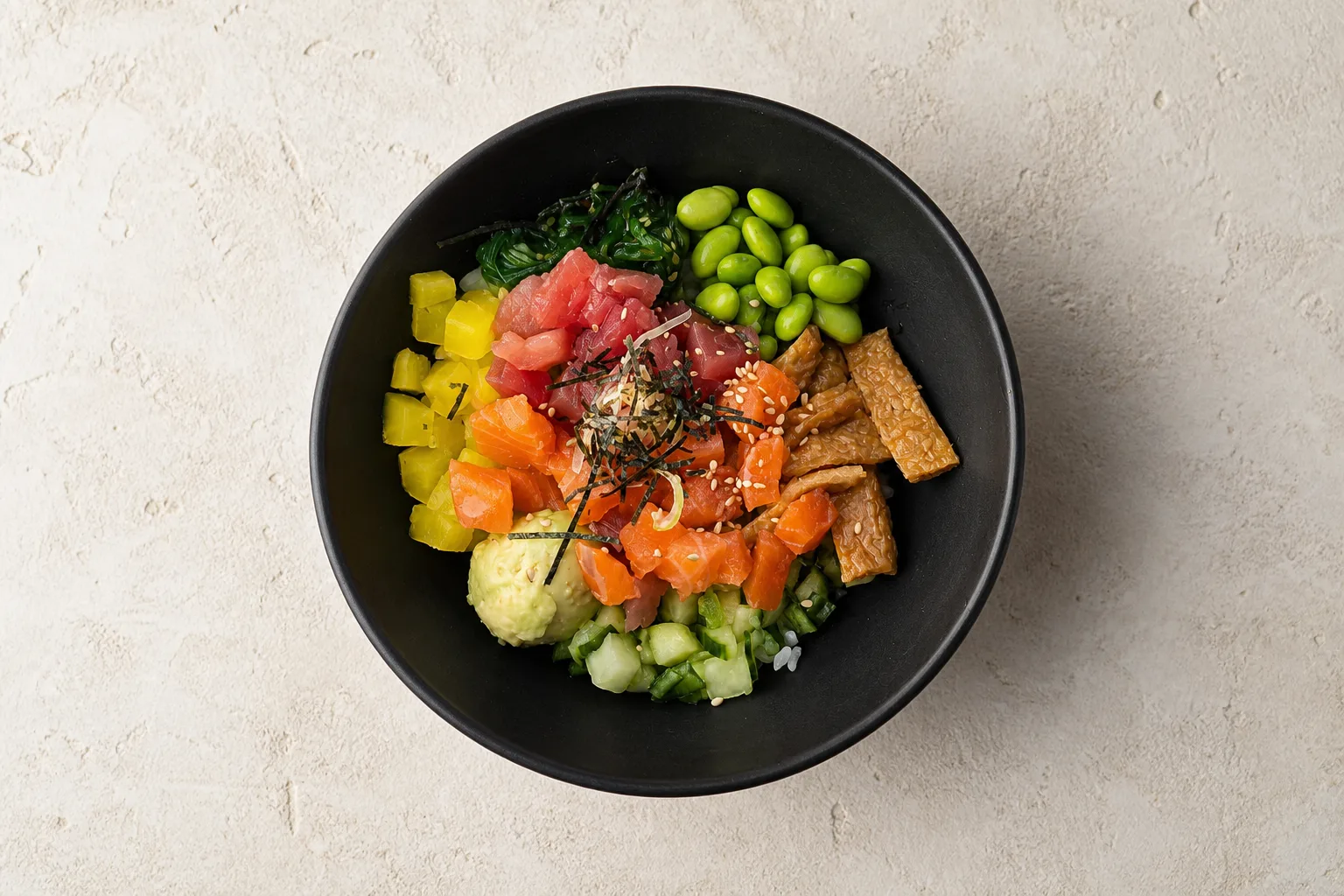
Poke is the exception to the rule that bowls should not be shot from above. Everything a customer is choosing between — which fish, how much avocado, whether the edamame is actually there — sits on the surface in labelled-looking sections. From any other angle, half of it disappears behind the rim.
Why the standard bowl advice is wrong here
A bowl of ramen or curry shot from overhead loses its depth and stops looking like something you would want to eat. That is the usual argument for the low three-quarter angle, and for those dishes it is correct.
Poke does not have depth to lose. It is a shallow bowl of arranged components with no broth level to reveal, and its selling point is legibility, not warmth. Overhead is not a compromise for poke — it is the shot.
This is worth stating plainly because it is the kind of rule that gets copied across a whole menu. A restaurant that photographs everything at three-quarters because that is what looks good for hot bowls will produce poke photos where the far half of the bowl is a brown blur.
What each platform's crop does to a poke bowl
The item specs below are the platforms' own, checked against their published pages on 2026-08-15 (source list in our DoorDash photo requirements guide).
| Platform | Item ratio | What a poke bowl loses |
|---|---|---|
| DoorDash | 16:9 landscape only | Nothing, but the sides of the frame are background |
| DoorDash thumbnail | centre-cropped to 1:1 | Nothing — overhead plus a round bowl is the ideal square subject |
| Uber Eats | 5:4 to 6:4 | Nothing at 5:4 |
| Grubhub | 4:3 | Nothing |
| Grubhub desktop header | cropped to 4:1 | Everything but a band across the middle sections |
Poke is one of the few dishes where the overhead shot and the best-cropping shot are the same shot. Take the win: the 1:1 thumbnail is the crop that appears in list views, where most ordering decisions actually get made, and an overhead poke bowl fills it completely.
The rule that catches poke menus
Uber Eats item photos must show a single item. A poke bowl is one item, so the bowl itself is fine — but the way poke is merchandised is not. Two bowls side by side to show two protein options, or a bowl with the sauce cups arranged around it, is multiple items, and the sauce cups are usually printed as well, which runs into the same platform's ban on text and logos.
One bowl, nothing beside it, no lid in frame.
Raw fish has a shelf life measured in minutes
Cubed raw tuna and salmon go matte and pale as the surface dries, and warm continuous lighting speeds that up considerably. What looks like a wet, translucent cube in the first minute looks like a dull opaque one in the tenth.
Shoot the fish first, or build the bowl with everything else in place and add the fish last. Cold, indirect light, and no longer than you need.
The shot that covers four of the five crops
Shoot one master at 4:3, at least 2400 × 1800 px, directly overhead, bowl centred with even margin all round, sections rotated so the fish faces the camera-up direction, one bowl only. The 4:1 header is not achievable from a bowl.
See how MenuFactory works — poke is the case where the dish itself must stay exactly as plated, and only the light changes, which is precisely the boundary MenuFactory works within.