AI Sushi Photography for Delivery Menus
A sushi roll is eight pieces, and the platforms count. Photograph eight and deliver six and you are not in a styling argument — you are in DoorDash's misrepresentation rule.
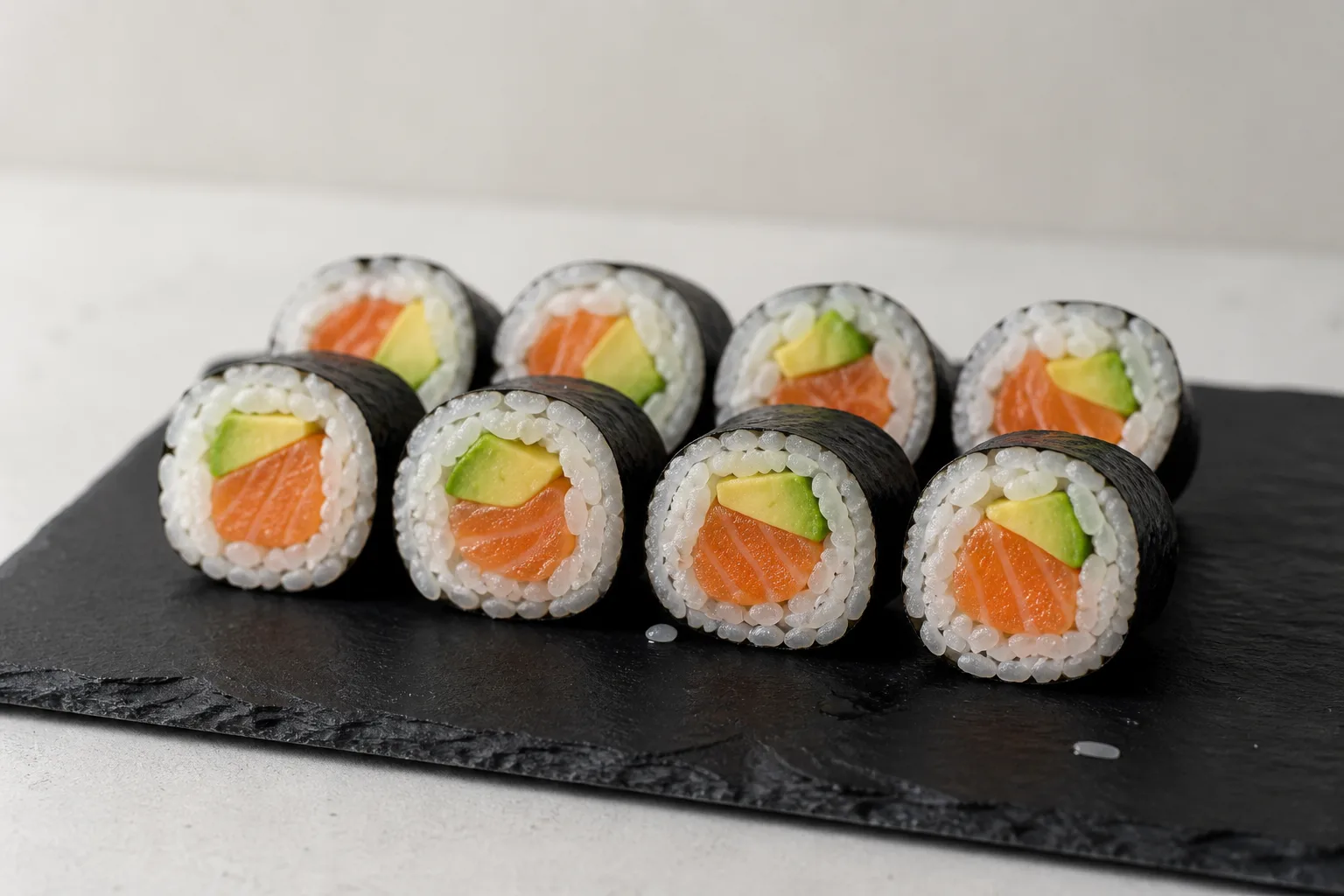
Sushi is sold by the piece, which makes it one of the only dishes where a customer can audit your photograph against their delivery. Most menu photos of sushi contain more pieces than the order does, and that is not a small styling liberty.
Piece count is a compliance question
DoorDash's rules include a misrepresentation clause: the image has to show the dish your kitchen actually sends out. For most dishes this is about portion size, which is fuzzy. For sushi it is a number.
A photograph of a ten-piece arrangement on a six-piece listing is a countable discrepancy that a customer can point at. Photograph the exact count on the listing, and photograph it again when the count changes.
The same logic applies to the garnish. Wasabi, pickled ginger and a lemon wedge are in almost every sushi photograph; if they do not go in the container, they should not be in the frame.
What each platform's crop does to a row of sushi
The item specs below are the platforms' own, checked against their published pages on 2026-08-15 (source list in our DoorDash photo requirements guide).
| Platform | Item ratio | What a sushi roll loses |
|---|---|---|
| DoorDash | 16:9 landscape only | Nothing — a row of pieces fills a wide frame |
| DoorDash thumbnail | centre-cropped to 1:1 | The end pieces, which changes the visible count |
| Uber Eats | 5:4 to 6:4 | The outer pieces at 5:4 |
| Grubhub | 4:3 | Little |
| Grubhub desktop header | cropped to 4:1 | Little — a row of pieces is a natural horizontal band |
The square thumbnail is the problem, and it is a sharper problem for sushi than for other wide dishes: cropping a row of eight down to a square does not just lose composition, it changes the number of pieces the customer sees. The image that made the promise and the image that gets displayed are showing different counts.
Arrange the pieces in two rows of four, or in an arc, rather than one straight line. A blocked arrangement has a near-square bounding box, survives the 1:1 with the full count intact, and still reads as a row at 16:9.
Gloss is the freshness signal, and it is also a reflection problem
Raw fish reads as fresh because its surface is wet and specular. That same surface reflects whatever is above it — a window, a light panel, a phone. At thumbnail size a reflected rectangle on a piece of salmon looks like a blown-out white patch, not like sheen.
Use a large, soft, indirect source rather than a small bright one, positioned off to the side rather than overhead. And shoot quickly: the surface dries and goes matte within a few minutes, which is the same window poke bowls have.
Nori goes soft on the clock
If the roll has an outer nori wrapper, it starts crisp and turns leathery as it absorbs moisture from the rice. That transition is visible — a crisp wrapper has defined edges, a soft one slumps. Roll and shoot in the same few minutes.
The shot
Shoot one master at 4:3, at least 2400 × 1800 px, pieces blocked rather than lined up, exact listing count, soft side light, plain unprinted board. A wide subject like this crops to every ratio above including the 4:1 header, so sushi is one shoot.
See how MenuFactory works — it improves the light on the fish you actually cut, so the piece count in the photo stays the piece count in the box.